How to Build an Email List for Free Using Organic Traffic That Lasts

Building an email list sounds straightforward until you face one important question: where will your subscribers come from?

You might have an email marketing account, a signup form, and something useful to share. But without visitors, your list has little opportunity to grow.

The good news is that you can learn how to build an email list for free without purchasing advertising or investing in expensive marketing software.

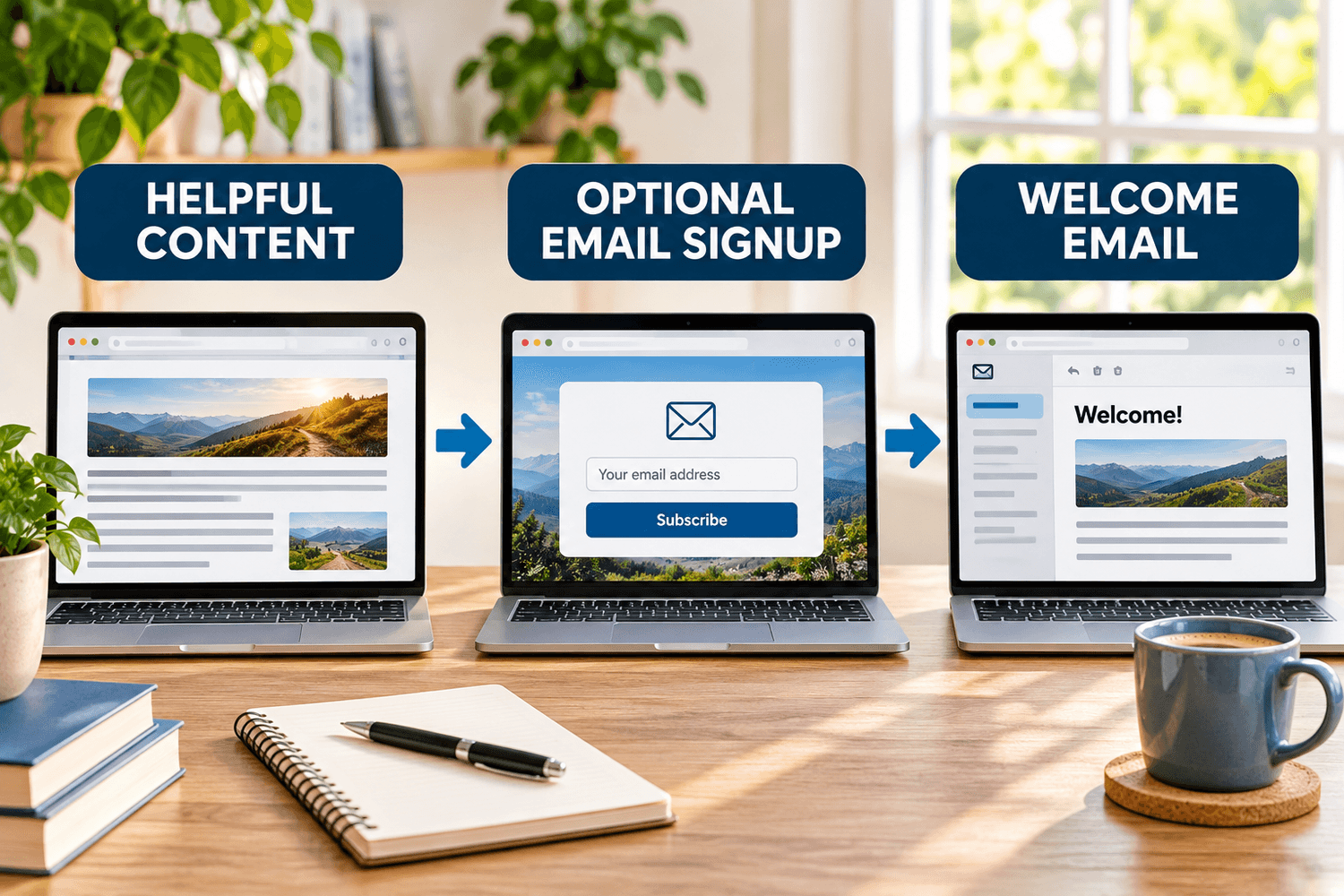
The key is connecting a simple email signup system with organic traffic sources that attract people interested in your topic.

Organic traffic takes effort. Some content may attract visitors for months, while other content receives little attention. Nothing guarantees permanent traffic or steady subscriber growth.

However, by creating useful resources, making subscriptions easy, and improving your approach over time, you can establish a list-building process that does not depend entirely on paid promotion.

Here's how to put those pieces together.

Why Organic Traffic Is a Smart Starting Point for Email List Building

What Organic Traffic Means for Email List Building

Organic traffic refers to visitors who discover your content through unpaid sources rather than paid advertisements.

These visitors might find you through Google, a helpful social media post, a community discussion, or a recommendation from another website.

For example, someone searching for ways to start affiliate marketing might discover an article explaining the process.

If that article offers a relevant free checklist, the visitor may decide to subscribe to receive it.

The important distinction is that traffic and subscribers are not the same thing.

Traffic brings people to your content. A clear, voluntary signup opportunity gives interested visitors a reason to join your email list.

Both parts matter.

Why Free Traffic Still Requires Time and Consistency

Free traffic does not necessarily mean effortless traffic.

You may avoid advertising expenses, but you still invest time researching topics, creating content, participating in communities, and improving your marketing process.

A new blog post might receive little attention initially. A social media post might reach only a small audience.

That does not automatically mean your strategy has failed.

Instead of expecting immediate results, concentrate on developing useful content and learning which topics attract the right readers.

Choose activities you can realistically maintain. Publishing one helpful article consistently may be more practical than attempting to manage several platforms without a clear plan.

How Evergreen Content Can Continue Attracting Visitors

Evergreen content addresses questions that remain relevant beyond a particular date or event.

Examples include tutorials, beginner guides, checklists, and explanations of common problems.

An article explaining how to create an email signup form may remain useful longer than a post discussing a temporary promotional offer.

When evergreen content remains accurate and discoverable, it can continue attracting visitors after publication.

But evergreen does not mean permanent.

Search results change, competitors publish new material, and information becomes outdated.

Review your most useful content periodically. Correct outdated instructions, improve unclear explanations, and ensure your signup offer still matches the reader's needs.

Set Up Your Free Email List Building System

Before worrying about traffic, establish a simple way to collect and manage subscribers.

You do not need a complicated marketing funnel to begin.

Choose an Email Marketing Platform With a Free Plan

An email marketing platform stores subscriber information and helps you send messages to people who have requested them.

Many platforms offer free starting options, although their features and limitations vary.

When evaluating a platform, look for these essentials:

  • A way to create signup forms.
  • Subscriber list management.
  • The ability to send welcome messages.
  • Basic reporting.
  • Unsubscribe functionality.
  • Clear information about free-plan limits.

Some platforms provide hosted landing pages, while others offer forms designed for existing websites.

Check the provider's current documentation before choosing. Free plans may limit subscribers, email sends, automation, or access to particular features.

You can begin with basic functionality and evaluate additional tools when you have a genuine need for them.

Create a Simple Signup Form or Landing Page

A signup form collects information from people who want to receive your emails.

A landing page is a standalone page focused on a particular action, such as subscribing to receive a free resource.

Both can work.

If you already operate a blog, you might place a signup form within a relevant article.

If you do not have a website, a hosted landing page may provide an alternative.

Your initial setup can be simple:

  1. Create an account with your chosen email platform.
  2. Set up a subscriber list or audience.
  3. Create a form requesting an email address.
  4. Explain what subscribers will receive.
  5. Connect the form to your list.
  6. Test the signup process yourself.

Request only information you genuinely need. An email address may be sufficient for a basic newsletter.

Make sure the form clearly communicates what someone is agreeing to receive.

Set Up a Welcome Email for New Subscribers

Your welcome email is the first opportunity to deliver on the promise made by your signup form.

If someone requested a checklist, explain how to access it.

If they joined a newsletter, introduce the topics you plan to cover.

A useful welcome email should:

  • Identify who is sending the message.
  • Thank the person for subscribing.
  • Deliver the promised resource, when applicable.
  • Explain what future emails will contain.
  • Offer a simple next step.

Keep the message clear and relevant.

If your platform supports automated welcome emails on your selected plan, you can configure one. Otherwise, review which welcome-message options are available before committing to a platform.

Test the complete process using an email address you control.

Give People a Reason to Join Your Email List

A working signup form is only the beginning.

People need to understand why joining your list would be worthwhile.

Identify One Problem Your Audience Wants to Solve

Start with a specific problem rather than trying to appeal to everyone.

For example, an audience interested in affiliate marketing might struggle to find free traffic sources.

An audience interested in email marketing might need help creating its first signup form.

Think about the questions your ideal readers repeatedly ask.

What task are they trying to complete? What confuses them? What would make the next step easier?

Choose one problem that you can address clearly.

A focused offer usually communicates its purpose more effectively than a vague promise of helpful information.

Create a Useful Lead Magnet Without Spending Money

A lead magnet is a resource offered to people who choose to subscribe.

It does not need to be a lengthy ebook or professionally produced course.

Useful beginner-friendly options include:

  • A checklist explaining a specific process.
  • A simple planning worksheet.
  • An email template.
  • A short instructional guide.
  • A sequence of educational emails.

Suppose you publish an article about generating organic traffic for affiliate marketing.

A companion checklist could help readers evaluate traffic sources and choose where to begin.

That resource fits the topic they are already exploring.

You can create simple documents using free writing or design tools, subject to the tools' current usage terms.

Prioritize accuracy, usefulness, and readability over elaborate presentation.

Write a Signup Message That Explains the Benefit

A signup invitation should tell visitors what they will receive.

Consider these two examples.

Generic invitation:

"Join my email list for updates."

More specific invitation:

"Get a free checklist to help you choose your first organic traffic source."

The second example explains the resource and its intended purpose.

Your actual message should reflect what you genuinely provide.

Avoid promises of guaranteed earnings, effortless success, or results that cannot be substantiated.

A clear description helps visitors decide whether the offer is relevant to them.

Use Search-Friendly Content to Attract Organic Visitors

Search-focused content can help people discover your website while researching questions related to your topic.

The goal is to create material that genuinely answers those questions.

Find Questions Your Target Audience Is Already Asking

Begin with the problems your audience wants to solve.

For an email marketing audience, potential topics might include:

  • How to create a signup form.
  • How to write a welcome email.
  • How to make a lead magnet.
  • How to attract email subscribers without advertising.

These are illustrative topic ideas, not verified keyword opportunities.

You can explore related searches, audience discussions, and questions appearing in communities to understand how people describe their problems.

Look for specific questions that you can answer thoroughly.

Avoid choosing topics solely because they sound popular.

Relevance to your audience and email signup offer matters.

Create Helpful Articles Around Specific Search Intent

Search intent is the purpose behind a person's search.

Someone searching for instructions to create a landing page probably wants practical steps, not a lengthy discussion about why online marketing matters.

Build the article around that need.

Explain the process clearly, use examples where helpful, and organize information logically.

Google's Search guidance emphasizes useful, reliable, people-first content and descriptive language that helps readers and search engines understand a page.

That does not mean following a checklist guarantees rankings.

It means your content should genuinely help the person who discovers it.

Connect Relevant Content to Your Email Signup Offer

Your signup offer should feel like a useful extension of the article.

For example:

Article topic: How to plan your first email welcome sequence.

Related signup resource: A free welcome email planning worksheet.

The visitor already wants to understand welcome emails, so the worksheet offers a logical next step.

Compare that with promoting an unrelated resource about social media graphics.

Even if the unrelated resource is useful, it may not match the visitor's immediate interest.

Create connections between the question being answered and the resource being offered.

Update Useful Content Instead of Constantly Starting Over

Publishing new articles is not the only way to improve your content.

Existing material may benefit from clearer instructions, updated examples, or corrected information.

Review articles that are important to your audience.

Ask whether the content still answers the original question accurately.

Check for broken links, outdated software instructions, and signup offers that no longer fit.

You can use Google Search Console to understand how your verified website appears in Google Search.

Use the available information to guide thoughtful improvements rather than making changes simply to chase rankings.

Build Organic Traffic Without Depending on Search Engines Alone

Search traffic can be valuable, but it is not the only unpaid way to introduce people to your content.

A manageable mix of discovery sources can reduce dependence on a single platform.

Share Useful Content on Relevant Social Platforms

Choose social platforms where your intended audience is likely to participate.

Instead of repeatedly posting a signup link, share useful information connected to your topic.

For example, a short post could explain one common mistake beginners make when setting up email forms.

You could then direct interested readers to a more complete tutorial when appropriate.

The educational content should have value even for people who do not click.

Avoid measuring success only by likes or impressions.

What matters for list building is whether relevant people discover your material and choose to subscribe.

Participate in Communities Without Spamming

Online communities can reveal questions that your audience genuinely wants answered.

Participate by offering useful explanations, sharing relevant experience when you have it, and respecting community guidelines.

Do not treat every discussion as an opportunity to drop an affiliate link or signup page.

Many communities restrict self-promotion, and repeated unsolicited links can damage your reputation.

When links are permitted and genuinely useful, they may help interested people find more detailed resources.

Focus on becoming a helpful participant rather than using communities as advertising boards.

Repurpose One Helpful Idea Into Multiple Content Formats

One useful article can support several smaller pieces of content.

For example, a detailed guide about lead magnets might become:

  • A short post explaining one common mistake.
  • A practical checklist shared as educational content.
  • A professional network discussion about matching offers to audience needs.
  • A brief explanation answering a relevant community question.

Adapt each version to its platform.

The purpose is not to publish identical promotional messages everywhere.

It is to make useful information accessible in formats that fit how different audiences discover content.

Choose Traffic Sources You Can Maintain Consistently

Beginners often feel pressure to use every available traffic source.

That can make content creation unnecessarily complicated.

Start with one primary discovery method and, if manageable, one supporting method.

For example, you might focus on search-friendly blog articles and share related educational posts on one social platform.

Track whether these activities bring relevant visitors.

Expand only when you understand your current process and have the time to maintain additional channels.

Consistency is easier when your strategy fits your available resources.

Turn Organic Visitors Into Email Subscribers

Attracting visitors creates an opportunity, but it does not guarantee subscriptions.

Your next responsibility is making the signup invitation relevant, clear, and trustworthy.

Match Your Signup Offer to the Visitor's Interests

People arrive at your content with particular questions in mind.

A visitor reading about email marketing software may appreciate a platform evaluation checklist.

Someone researching organic traffic might prefer a content planning worksheet.

Matching the resource to the topic gives the invitation a clear purpose.

You do not necessarily need a separate lead magnet for every article.

A small collection of useful resources can serve related content topics.

Review whether each invitation addresses a problem the reader is already trying to solve.

Place Signup Opportunities Where They Make Sense

A signup form should be easy to find without interrupting the reader unnecessarily.

Possible placements include a relevant point within an article, the end of a tutorial, or a dedicated landing page.

For example, after explaining how to plan an email sequence, you might introduce a worksheet that helps readers apply the instructions.

This is more natural than inserting unrelated promotional messages throughout the page.

Check the experience on mobile devices.

Forms should remain readable, and visitors should understand how to subscribe without navigating a confusing layout.

There is no universally successful placement. Test what works for your audience.

Make the Signup Process Simple and Trustworthy

People should understand what happens when they submit their email addresses.

Explain the type of messages they can expect.

Avoid collecting unnecessary personal information.

Use an honest description of the resource and avoid misleading promises.

Permission is particularly important. For example, Mailchimp's permission guidance explains its expectation that marketing contacts provide express, verifiable consent.

Platform policies and applicable laws can differ, so review the requirements relevant to your audience and email provider.

A transparent signup experience supports a more trustworthy subscriber relationship.

Keep New Subscribers Engaged After They Join

Building an email list is not simply collecting addresses.

Subscribers joined because they expected something useful. Your follow-up should respect that expectation.

Deliver What You Promised in the Welcome Email

If your signup page offers a downloadable guide, provide access to that guide.

If someone subscribed for educational updates, explain what topics you will cover.

Avoid immediately replacing the promised resource with an unrelated sales pitch.

A welcome email can also introduce your approach and suggest one useful article to read next.

Keep the initial message focused.

Send Helpful Emails That Match Subscriber Expectations

Your ongoing emails should relate to the reason people subscribed.

For example, subscribers interested in organic traffic may appreciate practical content planning advice, explanations of traffic sources, and useful examples.

Choose a sending schedule you can maintain.

A useful message sent consistently is preferable to a demanding schedule that causes you to publish rushed or irrelevant material.

Monitor how subscribers respond, but avoid assuming that every person will open or click every email.

Keep promotional messages relevant and distinguish them clearly from educational content.

Make It Easy for Subscribers to Manage or End Their Subscription

Subscribers should be able to stop receiving marketing emails.

For U.S. commercial email, the Federal Trade Commission's CAN-SPAM guidance explains requirements including truthful sender information, nondeceptive subject lines, a valid physical postal address, and a clear opt-out mechanism.

The FTC also explains that covered opt-out requests must be honored within 10 business days.

CAN-SPAM does not universally require advance opt-in consent for commercial email, but affirmative permission is a sensible list-building practice and may be required by your provider or other applicable laws.

Review the rules relevant to your business and recipients.

Do not make unsubscribing unnecessarily difficult.

Measure and Improve Your Free Email List Building Results

Once your system is running, measurement helps you understand which activities deserve attention.

You do not need complicated reports to begin.

Track Organic Visits, Email Signups, and Signup Rate

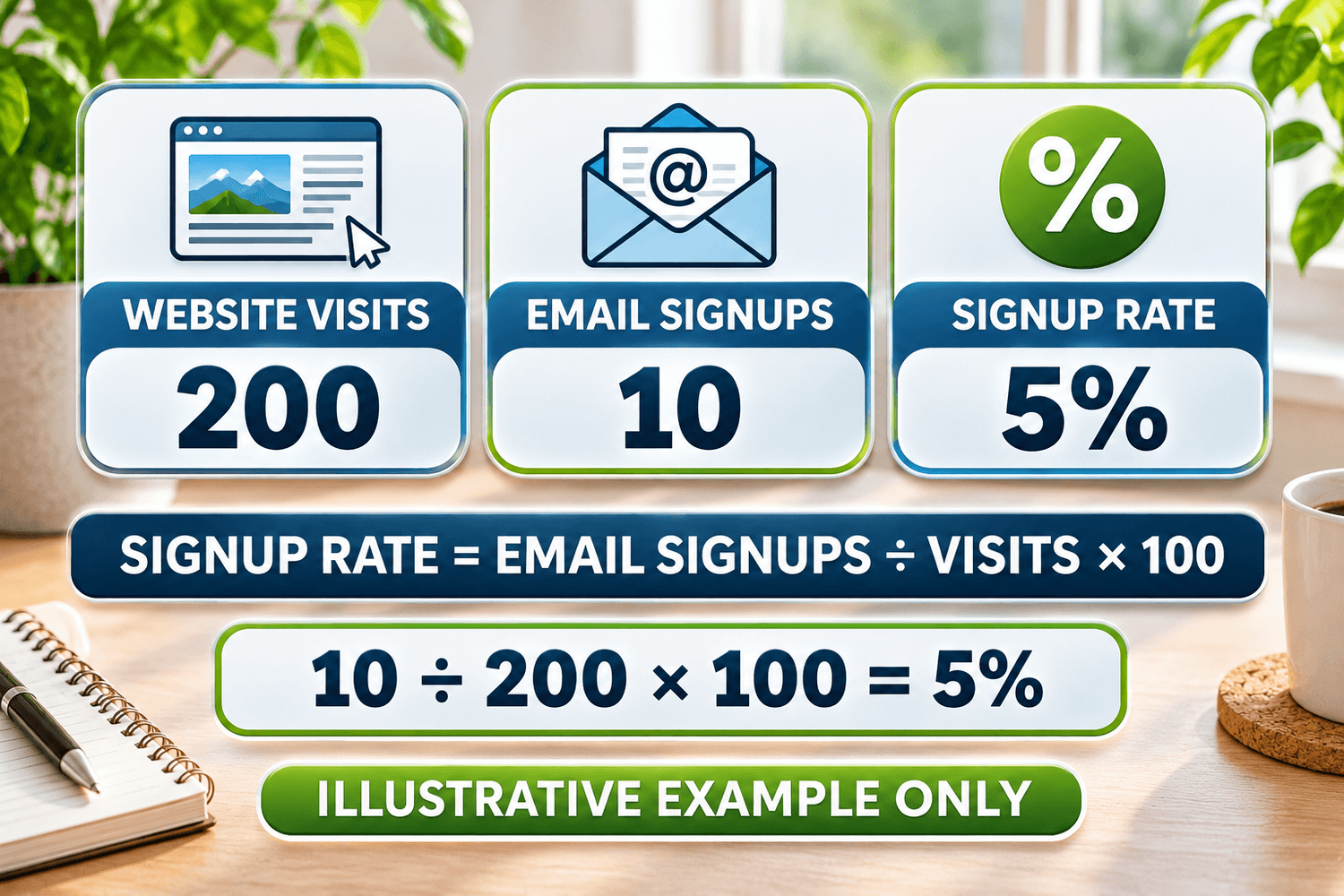
Start by distinguishing three measurements.

Website visits represent visits recorded for the content or page being measured.

Email signups represent subscriptions recorded through your signup process.

Signup rate expresses signups as a percentage of the visits included in your calculation.

Consider this illustrative example:

MeasurementExample
Website visits200
Email signups10
Signup rate5%

Illustrative example only — not actual performance results.

The formula is:

Signup Rate = Email Signups ÷ Website Visits × 100

Using these example figures:

10 ÷ 200 × 100 = 5%

This calculation is useful only when the signup count and visit count refer to a consistent measurement scope.

Different analytics platforms may define visits, sessions, and conversions differently.

Identify Which Content Brings Relevant Subscribers

Some articles may attract visitors who are interested in learning but not in subscribing.

Others may bring fewer visitors who find your signup resource particularly relevant.

Review which pages generate subscriptions and which traffic sources bring visitors to those pages.

Look for patterns in audience interests and signup offers.

Do not assume that a high visitor count automatically represents better list-building performance.

A smaller group of genuinely interested subscribers may be more useful than a large collection of poorly matched contacts.

Improve One Part of Your System at a Time

When your list is not growing, investigate the process before adding more traffic channels.

Ask a few practical questions:

  • Are relevant people reaching the content?
  • Does the signup offer match their interests?
  • Is the form working correctly?
  • Is the benefit clearly explained?
  • Are visitors able to subscribe on mobile devices?

Choose one issue to investigate.

For example, if a page receives relevant visitors but few subscriptions, review the signup message and offer before creating additional articles.

If almost nobody reaches the page, concentrate on discovery and content distribution first.

Make manageable improvements, observe the results, and keep building on what you learn.

Frequently Asked Questions

Can You Build an Email List for Free Without a Website?

Yes. Some email marketing services offer hosted landing pages or signup forms that can collect subscriptions without a separate website.

Check whether your chosen platform provides those features on its free plan.

You will still need a way to introduce interested people to your signup page.

How Long Does It Take to Get Email Subscribers From Organic Traffic?

There is no reliable universal timeline.

Results depend on factors such as audience relevance, content quality, visibility, and the usefulness of your signup offer.

Focus on establishing a functioning process and improving it rather than expecting a specific number of subscribers by a particular date.

Do You Need a Lead Magnet to Start an Email List?

No. A lead magnet is one way to encourage subscriptions, but it is not mandatory.

People may subscribe because they want a helpful newsletter, regular educational content, or updates on a topic they care about.

Whatever you offer, explain it clearly.

Is Organic Traffic Better Than Paid Traffic for Beginners?

Organic traffic can be attractive to beginners who have limited advertising budgets and time to develop content.

Paid traffic may provide more immediate exposure, but it requires spending money and does not guarantee profitable results.

Neither approach is universally better. The appropriate choice depends on your budget, skills, objectives, and available time.

What Should You Do if Your Email List Is Not Growing?

First, verify that your signup form and welcome process work.

Then review whether relevant visitors are reaching your content and whether the signup offer matches their interests.

If traffic is limited, focus on useful content and distribution. If traffic exists but subscriptions are limited, examine the offer, message, and form experience.

Avoid changing everything simultaneously.

Products / Tools / Resources

The following resources can help you put your free email list-building system into practice.

Email Marketing Platforms

Services such as MailerLite, Brevo, and Mailchimp offer email marketing tools. Review each provider's current free-plan eligibility, limits, and available features before choosing.

Landing Page and Signup Tools

Look for a platform that supports hosted signup pages or embeddable forms, depending on whether you already have a website.

Lead Magnet Creation Tools

A basic document editor or design application can help you create checklists, worksheets, and short guides. Check the current free-use terms and export options.

Content Research Resources

Use relevant audience questions, search suggestions, and Google Search Central to understand search-focused content practices.

Traffic and Signup Measurement Tools

Google Search Console can help website owners examine search visibility. Your email marketing platform may also provide signup and subscriber reporting.

Choose tools based on what you actually need, not the number of features advertised. A simple system that you understand and maintain is a useful place to begin.


Want a Simpler Way to Start Building Your Email List?

Building an email list takes time, but you don't need to figure out every step on your own.

Explore my free report for a practical introduction to generating leads online using beginner-friendly methods and simple copy-and-paste skills.

Get the Free Report and Explore the Process

WRITTEN BY

Tom Kimpton

Founder, Marketing With Tom

Tom Kimpton is the founder of Marketing With Tom, where he shares practical strategies for affiliate marketing, traffic generation, email list building, and making money online. He focuses on testing tools and strategies firsthand and sharing what he learns to help beginners build their online business.

READY FOR THE NEXT STEP?

Build Your Traffic and Email List With the Tools I Use

I’ve put together the resources I use and recommend for generating

traffic, building an email list, and growing an online business.

If you’re looking for a simple place to start, this is it.

Practical strategies for building traffic, growing an email list, and creating an online marketing business.

Start Here

New to online marketing?

Start with practical guides for generating traffic, building your email list, and creating a simple marketing system.

© 2026 Marketing With Tom. All rights reserved.