Identify Where Readers May Be Losing Interest
Analytics can reveal patterns worth investigating.
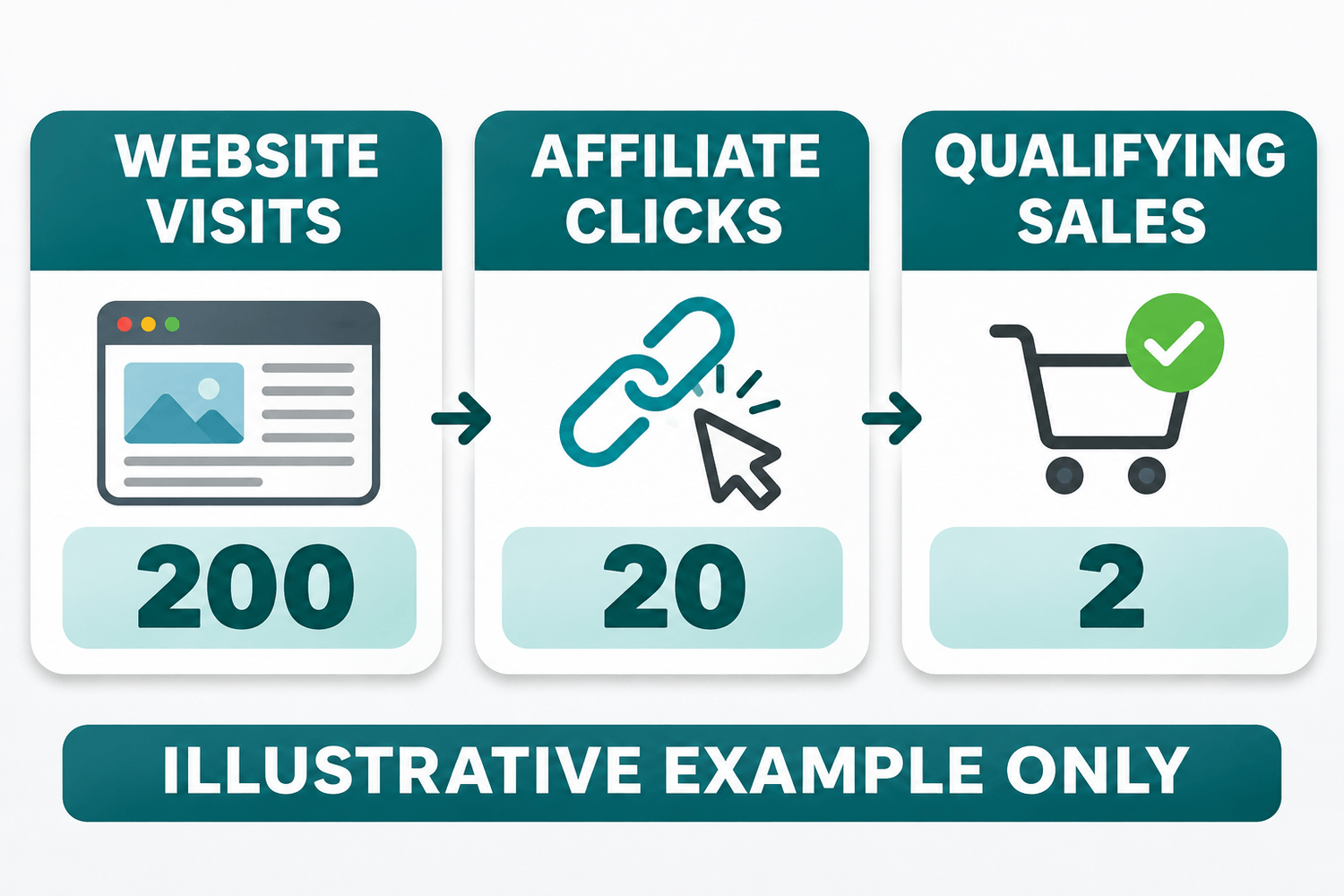
For example, an article might receive visitors but relatively few affiliate link clicks.
That doesn't automatically mean the recommendation is poor.
Perhaps readers are looking for introductory information rather than a product. The article might also lack sufficient detail about the recommended solution.
Review the content before drawing conclusions.
Ask whether the introduction matches the search query, whether the recommendation appears at a relevant point, and whether readers have enough information to evaluate it.
Analytics show behavior, but they don't always explain motivation.
Improve Content Using Available Performance Data
Start with manageable improvements rather than rewriting everything.
You might clarify confusing sections, answer missing questions, improve product comparisons, or update outdated information.
If an article attracts the wrong audience, review whether its title and content match the intended search intent.
If readers click affiliate links but few qualifying conversions appear, examine the available affiliate reports and program conditions before assuming the article is responsible.
Change one or two meaningful elements at a time when practical, then observe the available data.
The purpose is to make the content more useful and relevant—not chase an imaginary perfect conversion rate.
Build Your First Helpful Affiliate Article Step by Step
Choose One Reader Problem and One Relevant Offer
Start with a specific problem you understand well enough to explain.
For example:
"How can a beginner create an email signup form?"
This question has a clear educational purpose and may naturally involve an email marketing tool.
Research potential solutions before deciding which product, if any, deserves a recommendation.
Check whether the offer genuinely fits the reader's situation and whether its affiliate terms permit your intended promotional methods.
Outline the Article Around Useful Answers
Build a simple outline that follows the reader's likely questions.
For an email signup tutorial, the article might explain what a signup form does, what information is needed, how to create the form, and how to test it.
Keep the sequence logical.
A reader shouldn't need to understand advanced automation before learning how to create a basic signup form.
Your outline should make the task easier to complete, not create extra opportunities to mention products.
Add Honest Recommendations and Relevant Links
Once the educational structure is clear, identify where a recommendation genuinely helps.
For example, when explaining how to create a form, you might discuss the features readers should look for in an email marketing platform.
If you're recommending a specific affiliate product, explain its relevant capabilities and limitations using verified information.
Include a clear affiliate disclosure and a descriptive link where appropriate.
Avoid adding products simply because they offer attractive commissions.
A commission opportunity doesn't automatically make a product suitable for your audience.
Review, Publish, and Improve the Article
Before publishing, read the article as someone encountering the topic for the first time.
Would they understand the problem?
Could they follow the instructions?
Would they know why a product was recommended?
Use this prepublication checklist:
- The article answers a specific reader question.
- The title accurately describes the content.
- The instructions are understandable for the intended audience.
- Product features and limitations are accurately described.
- Affiliate relationships are disclosed clearly.
- Affiliate links lead to the intended destinations.
- The article is readable on desktop and mobile.
- Unsupported earnings or performance promises have been removed.
- The reader receives useful information even without purchasing anything.
After publishing, revisit the article when you have meaningful feedback, updated product information, or useful performance data.
Creating helpful affiliate content is an ongoing process of learning what readers need and improving how you answer their questions.
Frequently Asked Questions
Can Affiliate Content Convert Without a Large Audience?
Yes. A large audience isn't a prerequisite for someone to take a qualifying action through an affiliate recommendation.
A smaller audience with a relevant problem may still find a useful product recommendation valuable.
However, fewer visitors generally mean fewer opportunities for clicks and conversions. Neither audience size nor relevance guarantees results.
Focus first on attracting readers whose questions your content can genuinely answer.
Do I Need to Own a Product Before Recommending It?
Not necessarily, but you must be honest about your experience.
You can create researched content using reliable product documentation and clearly identified sources.
Don't claim to have tested a product or achieved results with it unless that's true.
For detailed reviews, firsthand experience can provide useful insights that product descriptions alone may not offer.
How Many Affiliate Links Should I Include in an Article?
There's no universal ideal number.
Include links where they help readers explore relevant products or complete the task discussed.
A short educational article may need very few. A comparison guide may reasonably include several.
Avoid repetitive or unrelated links, and make sure affiliate relationships are disclosed appropriately.
Can I Create Affiliate Content Without Paid Advertising?
Yes. Affiliate content can be published through websites, blogs, and other channels that attract visitors organically.
Search-focused articles, educational resources, and relevant audience engagement are possible approaches.
Organic traffic still requires work, and visibility isn't guaranteed.
The important starting point is creating content that answers genuine questions and fits the platform where it's published.
How Long Does It Take for Affiliate Content to Generate Results?
There isn't a reliable universal timeline.
Results depend on factors such as audience relevance, content quality, visibility, competition, product suitability, and affiliate program requirements.
Some content may attract attention relatively quickly, while other articles may take longer or never generate qualifying conversions.
Evaluate progress using available data rather than assuming that publishing a certain number of articles will produce a predictable income.
Products / Tools / Resources
You don't need a large collection of software to begin creating useful affiliate content. Start with the resources that support your immediate work.
Keyword and topic research: Google Search can help you examine questions, competing content, and search intent. Google Search Console can provide performance information for a verified website.
Writing and editing: A basic document editor can help you organize outlines, draft explanations, and review your work before publishing.
Website analytics: An analytics platform can help you understand visits and other available engagement measurements. Use your affiliate program's reporting tools for tracked affiliate activity.
Affiliate program documentation: Review official program terms to understand promotional restrictions, qualifying actions, tracking rules, and commission conditions.
Disclosure guidance: The FTC Endorsement Guides explain important considerations for affiliate relationships and endorsements.
Search and content guidance: Google Search Central's people-first content documentation offers guidance on creating useful, reliable information. Its outbound link documentation explains sponsored link attributes.
Choose tools based on the tasks you need to complete, verify their current features, and avoid paying for capabilities you aren't ready to use.