How to Get Your First Affiliate Sale Without Paid Ads or a Big Audience

Getting your first affiliate sale can feel like an uphill battle when you're starting with no audience, little website traffic, and no money to spend on advertising.

You might have joined an affiliate program, received your referral link, and wondered what you're supposed to do next. Should you share it on social media? Start a blog? Create videos? Or find a different product to promote?

The answer isn't to scatter your affiliate link everywhere and hope someone buys.

Learning how to get your first affiliate sale starts with connecting the right product to the right person through genuinely helpful content.

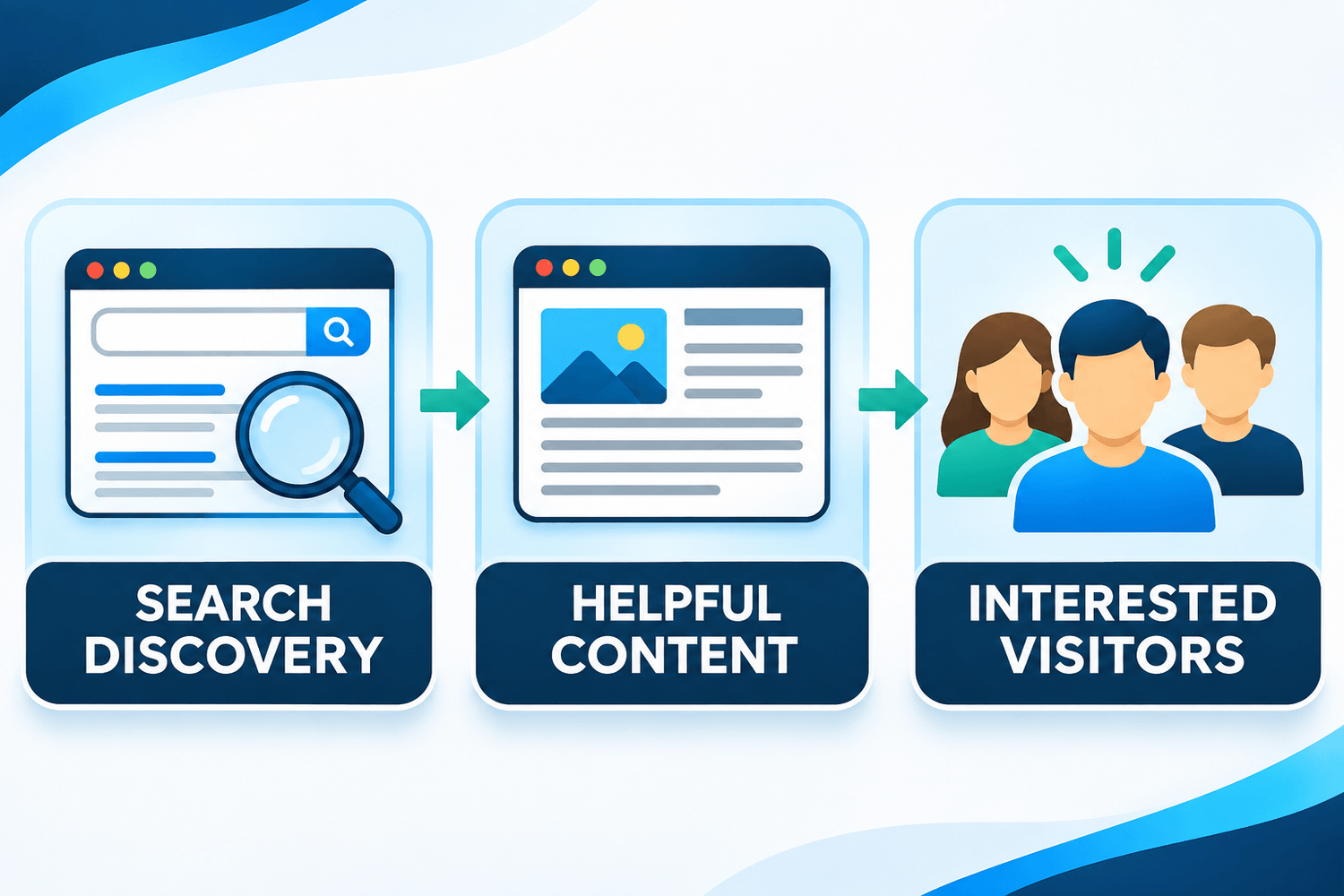
You don't necessarily need thousands of followers or a paid advertising budget. You do need a relevant offer, a way for interested people to discover your recommendations, and enough useful information to help them make an informed decision.

This guide walks through that process step by step, including choosing an affiliate offer, attracting free traffic, creating useful content, and tracking your progress.

1. What It Really Takes to Get Your First Affiliate Sale

Before choosing promotional strategies, it helps to understand what actually happens when someone makes a purchase through an affiliate recommendation.

How Affiliate Sales and Commissions Work

Affiliate marketing is a business arrangement in which a company rewards approved partners for qualifying customer actions.

Typically, you join an affiliate program, receive a unique tracking link, and recommend an eligible product or service.

When someone follows your link and completes an action that meets the program's requirements, you may earn a commission.

For example, imagine promoting a beginner-friendly email marketing tool.

Someone reads your tutorial, clicks your affiliate link, and decides to purchase the tool. If the transaction qualifies under the program's terms, a commission may be credited to your account.

However, a click alone usually doesn't mean you've earned money. Programs can have different attribution periods, eligibility requirements, refund rules, and payment conditions.

Understanding these distinctions prevents you from confusing promotional activity with actual earnings.

Why You Don't Need a Huge Audience to Start

A large audience can create more opportunities for exposure, but audience size alone doesn't determine whether someone buys.

Imagine two hypothetical websites.

One attracts hundreds of visitors looking for general entertainment. The other attracts a smaller group researching a specific software solution.

The second website might have fewer visitors but more relevant opportunities to recommend that software.

This doesn't guarantee better results. It illustrates why visitor relevance and purchase intent deserve attention alongside traffic volume.

For beginners, attracting a few genuinely interested visitors can be a more manageable starting objective than trying to build a massive following.

What Beginners Should Focus on Before Earning a Commission

Instead of making your first commission the only measure of progress, concentrate on developing the elements that make a legitimate sale possible.

These include:

  • Selecting a product that addresses a real problem.
  • Understanding who might benefit from that product.
  • Creating content that answers useful questions.
  • Helping interested readers discover your content.
  • Explaining recommendations clearly and transparently.

You can work on these activities even before your first visitor clicks an affiliate link.

Your initial objective is to build a useful recommendation process, not to chase a guaranteed earnings deadline.


2. Choose an Affiliate Offer That Fits Your Audience

Your affiliate offer influences almost everything that follows, from the content you create to the visitors you hope to attract.

Start With a Specific Problem People Want to Solve

A common beginner mistake is choosing products based primarily on their advertised commissions.

A high commission isn't especially useful if the product doesn't match your readers' needs.

Instead, begin with a problem.

For example, someone interested in email marketing might want to collect subscribers, send automated welcome messages, or organize an email list without complicated software.

Those needs suggest possible product categories.

You could create educational content about beginner email marketing and consider recommending a suitable tool when it genuinely addresses the reader's problem.

Starting with the problem helps you develop content and recommendations that fit together naturally.

Find Relevant Affiliate Programs and Products

Once you've identified a problem, research products or services designed to solve it.

Look for affiliate programs through official company websites, established affiliate networks, or businesses already serving your chosen audience.

Before applying, investigate whether the program accepts your intended promotional methods.

Some programs allow certain social media channels, while others impose website, content, location, or audience requirements.

Avoid joining several unrelated programs simply because they're available.

Beginning with one carefully selected offer gives you an opportunity to understand the product, develop relevant content, and evaluate your results without unnecessary distractions.

Check Product Quality, Commission Terms and Restrictions

Before recommending anything, examine more than the potential payout.

Ask yourself:

  • Does the product address the problem I'm discussing?
  • Can I accurately explain what it does?
  • Are its limitations clear?
  • Is the pricing appropriate for the intended customer?
  • What actions qualify for a commission?
  • Are there restrictions on promotional methods?
  • What happens if a customer cancels or requests a refund?

Read the program's current terms rather than relying on promotional summaries.

You should also distinguish what you've personally tested from information obtained through official documentation or other reliable sources.

A trustworthy recommendation explains why a product might be useful without pretending it's perfect for everyone.

3. Build a Simple Foundation Without Spending Money on Ads

You don't have to purchase advertising to begin affiliate marketing.

You do, however, need an appropriate place to publish useful information and reach interested people.

Choose One Primary Content or Traffic Platform

Beginners often feel pressured to start a website, video channel, newsletter, and several social accounts simultaneously.

That approach can spread limited time too thin.

Choose one primary platform that fits the content you're comfortable producing and the people you want to help.

A blog can work well for detailed tutorials and search-oriented articles. A video channel may suit demonstrations. A suitable social platform can support educational posts and discussions.

Check whether your chosen affiliate program permits promotion through that platform.

The goal is to develop a repeatable content process before expanding into additional channels.

Create a Helpful Profile or Simple Online Presence

Your online presence should make it easy for visitors to understand what you discuss and why your content might help them.

Start with a clear description of your topic, an organized collection of useful information, and straightforward navigation where applicable.

For example, a beginner-focused marketing profile might explain that it shares practical guidance about email list building, content creation, and affiliate marketing.

You don't need elaborate branding to communicate a useful purpose.

What matters more is presenting accurate information consistently and avoiding misleading claims about your experience or results.

A website can provide greater control over long-form content, but it isn't universally required by every affiliate program.

Prepare Your Affiliate Links and Required Disclosures

Affiliate relationships should be disclosed clearly.

For U.S. audiences, the Federal Trade Commission explains that affiliate marketers should disclose commission relationships in a way readers can easily notice and understand.

A straightforward example is:

I may earn a commission if you purchase through links in this article.

Place disclosures where readers can connect them with the relevant recommendations. A disclosure hidden on an unrelated page may not be sufficient.

You can review the FTC's guidance on affiliate disclosures.

Individual affiliate programs may impose additional requirements. Always review those rules before publishing promotional links.

4. Create Helpful Content That Attracts Potential Buyers

An affiliate link gives someone a destination. Helpful content gives them a reason to consider visiting it.

Identify Questions People Ask Before Buying

Think about the questions someone might ask while researching a product.

For an email marketing tool, those questions could include:

  • How do I start building an email list?
  • What features does a beginner actually need?
  • Can I use the software without technical experience?
  • How do different tools compare?
  • What limitations should I understand before subscribing?

These questions reveal different stages of the buying process.

Someone asking how email marketing works may need basic education. Someone comparing two tools may be closer to making a purchasing decision.

Both can be valuable audiences, but the content should match their actual questions.

Create Tutorials, Comparisons and Problem-Solving Content

You don't need complicated content formats to begin.

A tutorial can walk readers through a specific task. A comparison can explain meaningful differences between products. A troubleshooting article can help someone overcome a common obstacle.

For example, an article explaining how to create a welcome email sequence could describe the process, identify useful software features, and discuss an appropriate tool.

A comparison article might evaluate usability, pricing structures, limitations, and suitability for different beginners.

Avoid inventing product testing or presenting manufacturer claims as personal experience.

Useful content should help readers even when they decide not to purchase anything.

Introduce Affiliate Recommendations Naturally

Affiliate recommendations work best when they are relevant to the surrounding explanation.

Suppose your article teaches readers how to organize an email list.

After explaining the task, you might introduce a tool that supports the necessary features, discuss its limitations, and direct interested readers to the official product information.

That's different from inserting an unrelated affiliate link into every paragraph.

The recommendation should follow naturally from the reader's problem.

Make the commercial relationship clear and give readers enough information to decide whether the product is appropriate for them.

5. Get Free Traffic to Your Affiliate Content

Once you have useful content, the next challenge is helping interested people find it.

Organic traffic doesn't require purchasing advertising space, although creating and distributing content still requires time and effort.

Use Search-Friendly Content to Reach Interested Readers

Search engines can help people discover content that addresses questions they're already asking.

Start by identifying a specific topic that matches your audience's needs.

For example, instead of writing a broad article about online marketing, you might explain how to choose an email marketing platform for a small beginner newsletter.

Give the article a clear title, organize it with useful headings, and answer the central question thoroughly.

Use relevant terminology naturally. Avoid repeating keywords simply to make the page appear optimized.

Search visibility takes time and isn't guaranteed, especially for new websites.

Treat search-friendly content as a long-term discovery opportunity rather than a promise of immediate visitors.

Share Useful Content Through Relevant Communities and Platforms

Search isn't the only way to attract visitors.

You can participate in relevant discussions, answer questions, and share educational material where the platform's rules permit it.

For example, if someone asks how to organize a simple email sequence, you could provide a genuinely useful answer.

If linking to your article is permitted and adds value, you might share it as an additional resource.

The key is to participate as someone helping solve a problem rather than someone distributing promotional links.

Some communities prohibit affiliate links or self-promotion entirely. Respect those restrictions.

Build Consistency Without Spamming Affiliate Links

Free traffic strategies become easier to manage when you establish a routine.

You might publish one useful article each week, share selected educational insights, and respond to relevant questions when you have something helpful to contribute.

That routine can be adjusted to your available time.

Avoid repeatedly posting the same link, sending unsolicited promotional messages, or joining unrelated discussions solely to advertise.

These activities can damage trust and violate platform policies.

Consistency should mean repeatedly providing useful information, not repeatedly asking strangers to buy something.

6. Help Interested Visitors Make an Informed Buying Decision

Attracting visitors is only part of the process.

Your content also needs to help readers understand whether the recommended product fits their circumstances.

Match the Affiliate Offer to the Visitor's Needs

A product can be legitimate and still be a poor match for a particular reader.

Someone seeking a simple free tool may not need an advanced paid platform with features designed for established businesses.

Before recommending an offer, consider the reader's experience, budget, intended use, and likely concerns.

Explain who the product is suitable for and who might prefer another option.

This approach can make your content more useful than a recommendation based entirely on commission potential.

Explain Benefits, Limitations and Who the Product Is For

Readers need enough information to evaluate a product independently.

Discuss relevant capabilities, important limitations, possible learning requirements, and costs when verified.

For example, a software platform might offer useful automation features while requiring time to learn its interface.

Both details can matter to a beginner.

If you haven't personally used the product, don't claim that you have. You can still provide a careful explanation based on verified documentation while being transparent about your evidence.

Balanced recommendations help readers make informed decisions rather than relying on exaggerated promises.

Use Clear Calls to Action Without Pressure

A call to action tells an interested reader what they can do next.

In affiliate content, it might invite someone to review product details, compare available plans, or visit an official product page.

For example:

If this tool matches the features you're looking for, review its current plans and limitations before deciding whether to subscribe.

This is more informative than insisting that everyone must purchase immediately.

Avoid invented deadlines, false scarcity, or promises that buying a product will automatically produce business results.

A clear recommendation should support the reader's decision, not replace it.

7. Track Your Progress and Troubleshoot Missing Sales

If you're publishing content but haven't earned a commission, basic measurements can help you understand what is happening.

Understand Traffic, Affiliate Clicks and Qualifying Sales

Three important measurements are website visits, affiliate link clicks, and qualifying affiliate sales.

They represent different activities.

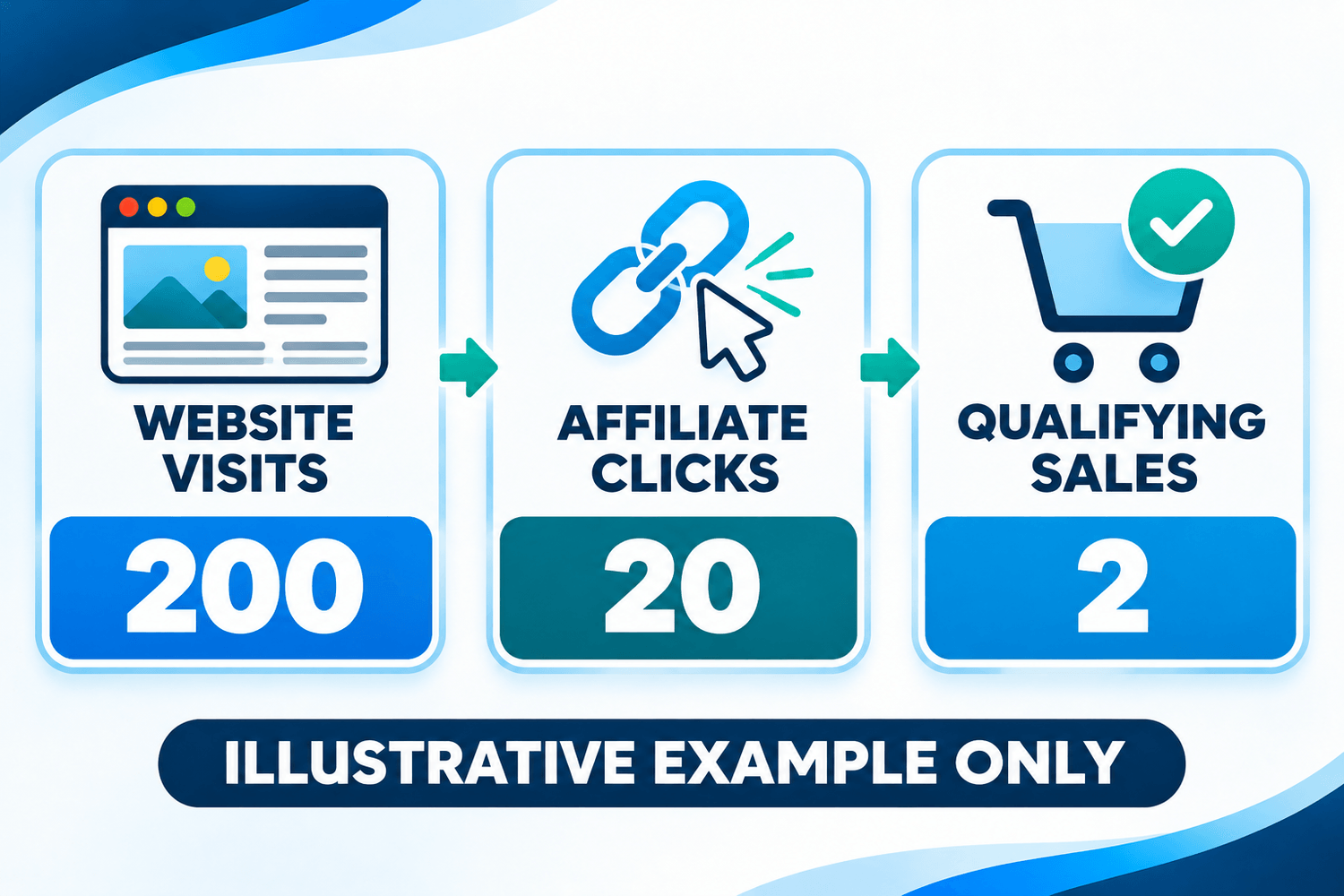
Consider this entirely illustrative example:

MeasurementExample
Website visits200
Affiliate link clicks20
Qualifying sales2

These numbers are hypothetical, not actual results or expected performance.

In this example, 20 clicks from 200 visits represent a 10% click-to-visit ratio, assuming the measurements use compatible definitions.

Two qualifying sales from 20 affiliate clicks represent a 10% click-to-sale ratio.

Actual tracking systems may count visits, clicks, customers, and attributed sales differently. Not every click is necessarily followed by a purchase, and not every purchase qualifies for commission.

The purpose of tracking is to understand separate stages rather than assume that one automatically produces the next.

Identify Whether Traffic or Offer Relevance Needs Attention

Different patterns suggest different questions.

If your content receives very few relevant visitors, examine whether the topic addresses a question people are actively researching and whether your distribution methods reach them.

If visitors read the content but rarely click the affiliate recommendation, consider whether the offer is relevant, clearly explained, and easy to find.

If affiliate clicks occur without qualifying sales, review the offer's suitability, available program reports, and any obvious mismatch between the recommendation and the product.

Remember that you generally cannot observe every step of a customer's decision or attribute every outcome to one cause.

A small amount of data rarely proves why a sale did or didn't happen.

Make One Improvement at a Time

Avoid rebuilding your entire strategy after a few disappointing days.

Choose one meaningful improvement.

You might clarify a confusing product explanation, publish a more specific tutorial, or improve the relevance of a recommendation.

Record what you changed and observe what happens over a reasonable period.

If traffic is limited, focus first on producing more useful content and attracting appropriate visitors rather than treating small percentage changes as conclusive evidence.

The goal is to learn from available information without pretending every result has a simple explanation.

8. Build a Repeatable Plan for Working Toward Your First Sale

Your first affiliate sale may take longer than expected. A manageable routine can help you continue making progress without depending on daily commission results.

Set a Manageable Weekly Content and Promotion Routine

Here is a simple seven-day starter plan.

DaySuggested activity
Day 1Identify a specific audience problem
Day 2Research one relevant affiliate offer
Day 3Choose a content platform and review its rules
Day 4Outline a helpful tutorial or comparison
Day 5Publish or improve one useful piece of content
Day 6Share relevant educational insights where permitted
Day 7Review your work and plan the next improvement

This is an activity schedule, not a seven-day earnings challenge.

You may need additional time for research, program approval, writing, or publishing.

Adjust the schedule to your circumstances rather than rushing to meet an arbitrary deadline.

Review What You're Learning From Visitor Behavior

Once your content is available, pay attention to the information you can reliably measure.

Which topics receive attention? Are visitors finding the material you intended to share? Do relevant recommendations receive clicks?

You may not have enough data to answer these questions immediately.

Keep simple notes about published content, promotion activities, and improvements.

Over time, those records can help you identify which activities deserve more attention.

Don't confuse a temporary increase in traffic with proof that a particular strategy will consistently produce sales.

Stay Consistent Without Expecting Overnight Results

Affiliate marketing involves several activities that don't always produce immediate visible results.

Content needs to be created. Visitors need to discover it. Interested readers need to evaluate recommendations. Qualifying transactions must meet program rules.

Some beginners may receive an early commission, while others may work for a considerable period without one.

There is no universal first-sale timeline.

Instead of comparing yourself with promotional income stories, focus on whether you're improving the quality of your content, understanding your audience, and making better-informed recommendations.

Consistency is useful when it supports learning and meaningful improvements. Repeating an ineffective approach indefinitely isn't a requirement.

Frequently Asked Questions

Can You Get Your First Affiliate Sale Without a Website?

Yes, some affiliate programs permit promotion through eligible social media profiles, video channels, or other approved platforms. However, individual programs have different participation and promotional requirements. Check the rules before assuming your preferred platform qualifies.

How Long Does It Take to Get Your First Affiliate Sale?

There is no reliable universal timeline. Results depend on factors such as the offer, visitor relevance, content quality, competition, promotional methods, and customer decisions. Avoid treating someone else's first-sale story as a typical outcome.

Can You Start Affiliate Marketing With No Money?

Some affiliate programs are free to join, and certain content platforms offer free publishing options. However, your activities still require time, and some tools, domains, or services may involve costs. Check program eligibility and platform requirements before committing.

Do You Need Social Media Followers to Make Affiliate Sales?

Not necessarily. Depending on the affiliate program and your chosen platform, interested visitors may discover your content through search, educational resources, or relevant communities. A large follower count is not a universal requirement, although reaching suitable visitors remains important.

What Should You Do If People Click Your Affiliate Links but Don't Buy?

Start by reviewing whether the offer matches the content and intended audience. Check available tracking reports, product information, and program terms. Consider whether your recommendation explains the product clearly. Avoid assuming a specific problem from a handful of clicks, and remember that some transactions may not qualify for commissions.

Products / Tools / Resources

You don't need a complicated collection of paid tools to begin.

These resource categories can support different parts of your first-sale process:

  • Affiliate program documentation: Review official eligibility rules, commission conditions, approved promotional methods, and payment requirements.
  • Content publishing platform: Choose a blog, video channel, or other permitted platform suited to your audience and content format.
  • Basic analytics: Use available website or platform reporting to understand visits and content discovery, while recognizing measurement limitations.
  • Affiliate reporting dashboard: Review tracked clicks and qualifying transactions according to your program's reporting definitions.
  • Content planning document: A simple notebook or spreadsheet can help organize article ideas, publication dates, and improvements.
  • FTC affiliate disclosure guidance: Consult the FTC's Endorsement Guides FAQ when preparing transparent affiliate recommendations for U.S. readers.

Start with the resources you genuinely need. Learn how they work before adding more software or expenses.

Your most useful next action is to choose one audience problem, research a suitable offer, and create one genuinely helpful piece of content that connects the two.


Want to Learn More About Building Leads Online?

If you're just getting started with affiliate marketing, building a steady source of interested leads can be an important part of your strategy.

Get access to my free report, where I share the approach I use to generate leads and work toward earning money online.

Discover practical ideas you can explore without relying on complicated marketing strategies.

Get My Free Report

WRITTEN BY

Tom Kimpton

Founder, Marketing With Tom

Tom Kimpton is the founder of Marketing With Tom, where he shares practical strategies for affiliate marketing, traffic generation, email list building, and making money online. He focuses on testing tools and strategies firsthand and sharing what he learns to help beginners build their online business.

READY FOR THE NEXT STEP?

Build Your Traffic and Email List With the Tools I Use

I’ve put together the resources I use and recommend for generating

traffic, building an email list, and growing an online business.

If you’re looking for a simple place to start, this is it.

Practical strategies for building traffic, growing an email list, and creating an online marketing business.

Start Here

New to online marketing?

Start with practical guides for generating traffic, building your email list, and creating a simple marketing system.

© 2026 Marketing With Tom. All rights reserved.