Create Helpful Content That Attracts the Right Readers
Start With Content That Answers One Question Clearly
Your first piece of content doesn't need to cover everything about your niche.
It needs to answer a worthwhile question.
Let's continue with the welcome-email example.
Instead of writing a broad article about email marketing, explain how a beginner can create a useful first message.
You could cover what to include in the subject line, how to introduce yourself, how to deliver a promised resource, and what subscribers should expect next.
Include a simple example readers can adapt.
The goal isn't to impress people with complicated terminology. It's to help them finish the task they came to learn.
That kind of usefulness gives your content a purpose beyond attracting clicks.
Use Simple Formats Like Tutorials, Checklists, and Short Guides
Different questions benefit from different content formats.
A tutorial works well when readers need instructions.
A checklist helps when they need to remember several steps.
A short guide can explain a concept and provide examples.
For instance:
| Reader's Question | Useful Content Format |
|---|
| How do I write a welcome email? | Step-by-step tutorial |
| What should my signup page include? | Practical checklist |
| What is a lead magnet? | Beginner explanation |
| Why isn't my signup form converting? | Troubleshooting guide |
Choose the format that makes the answer easiest to understand.
You don't need to create every format immediately. One genuinely helpful resource is a better starting point than several rushed pieces that leave important questions unanswered.
Give Readers Real Value Before Asking for Their Email Address
Imagine finding an article that promises to explain something important.
You read two paragraphs, and then the writer tells you to subscribe before revealing anything useful.
That's frustrating.
A better approach is to deliver the information your content promised.
Explain the process. Include examples. Help readers understand what to do.
Then, when appropriate, introduce a complementary resource.
For example, your welcome-email tutorial might explain the entire writing process while offering a printable checklist for readers who want a convenient reference.
The checklist adds value without withholding the original answer.
This distinction matters because you're trying to build a relationship with interested people, not simply collect email addresses.
Get Your Helpful Content Seen When You Have No Followers
Share Useful Answers in Relevant Online Communities
Online communities can help you discover questions and participate in conversations before you have an established following.
The important word is participate.
Find discussions where people are genuinely asking about subjects you understand.
Read the question carefully and provide a useful answer.
If someone asks how to write a welcome email, you might explain the basic structure and offer an example directly in your response.
Don't immediately drop a signup link into every conversation.
Many communities restrict promotional content, and unsolicited links can undermine trust.
Follow the rules of each community. Share a relevant resource only when it's permitted and genuinely helpful.
Your immediate objective should be contributing useful information, not turning every interaction into a subscription request.
Publish Searchable Content That Can Be Discovered Over Time
Search-oriented content gives you another way to reach people who aren't already following you.
A useful article can address a specific question someone types into a search engine.
For example, a beginner might search for instructions on creating a welcome email sequence.
An article that answers that question clearly has a relevant purpose.
Use descriptive headings, explain the subject thoroughly, and make the information easy to navigate.
You can publish educational articles on a website or an appropriate publishing platform.
Remember that publication doesn't guarantee search visibility. Search engines decide what to discover, index, and display, and results can take time or may never materialize.
Treat searchable content as a long-term discovery opportunity rather than a guaranteed traffic source.
Repurpose One Helpful Idea Across Multiple Platforms
Creating useful content takes effort.
You can make that work more manageable by adapting one idea into several formats.
Suppose you've written a tutorial about welcome emails.
You could turn it into:
- A short educational post explaining three common welcome-email mistakes.
- A checklist highlighting the essential parts of a first message.
- A relevant answer in an online discussion.
- A longer article explaining the complete process.
Each version should provide value on its own.
Avoid copying the same promotional message everywhere. Different platforms and audiences have different expectations.
You also don't need to publish on five platforms immediately.
Choose one or two places where your intended readers are likely to look for information. Learn how those channels work before expanding.
Turn Helpful Content Into Email Subscribers
Offer a Relevant Free Resource That Builds on Your Content
This is where the different parts of your strategy begin working together.
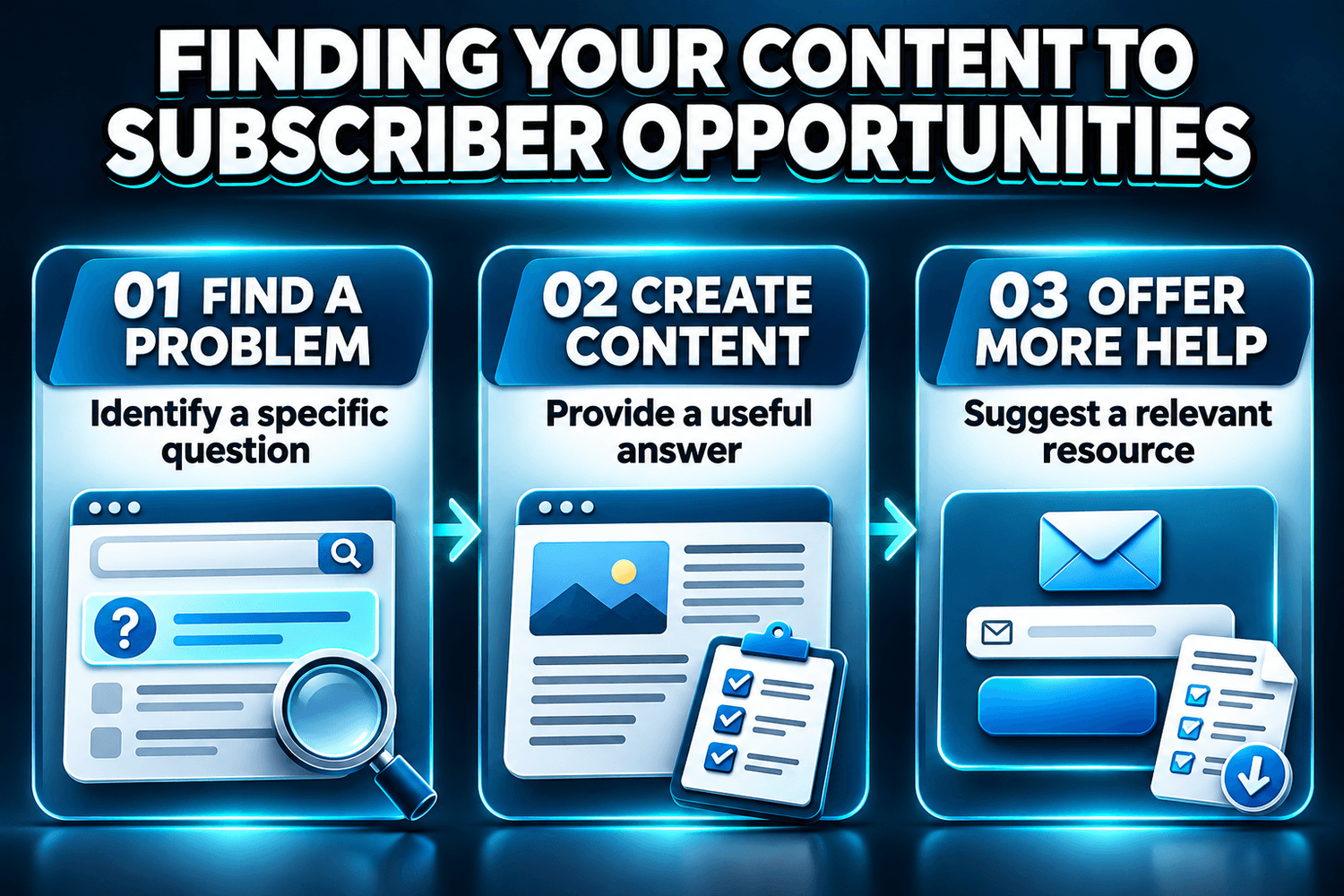
Someone discovers your content because it addresses a problem.
They read it and find the information useful.
Then they see an opportunity to receive something that helps them take the next step.
That additional resource is often called a lead magnet.
A lead magnet might be a checklist, template, worksheet, short guide, or other useful resource offered in exchange for a voluntary email subscription.
The strongest connection is usually between the reader's immediate problem and the resource you're offering.
For example:
Helpful content: How to write your first welcome email.
Related resource: A beginner welcome-email checklist.
Subscriber benefit: A convenient reference they can use while writing their own message.
You don't need an enormous ebook to create a useful offer.
A focused resource that helps someone accomplish a specific task may be enough to justify subscribing.
Create a Simple Signup Page With a Clear Benefit
Once you have a relevant offer, people need somewhere to subscribe.
A landing page is a dedicated page designed around a specific action, such as joining an email list.
For a beginner, a straightforward page can include:
- A clear headline describing the resource.
- A short explanation of its benefits.
- A form requesting the necessary information.
- A clear subscription button.
- An explanation of what emails the subscriber can expect.
Avoid vague promises like "Get amazing updates."
Instead, explain exactly what the reader will receive.
You should also ensure your email service can deliver the promised resource and manage subscriptions appropriately.
If you're working with limited funds, you can explore the options discussed in How to Build an Email List for Free.
And if you don't have a traditional website, How to Build an Email List Without a Website covers that separate challenge.
The important point is that readers should understand what they're signing up for before submitting their information.
Place Your Invitation Where It Feels Natural and Helpful
Your signup invitation should make sense in the context of the content.
In a welcome-email tutorial, you might mention the related checklist after explaining how to structure the message.
Readers who want a convenient reference can choose to subscribe.
Others can continue using the article without signing up.
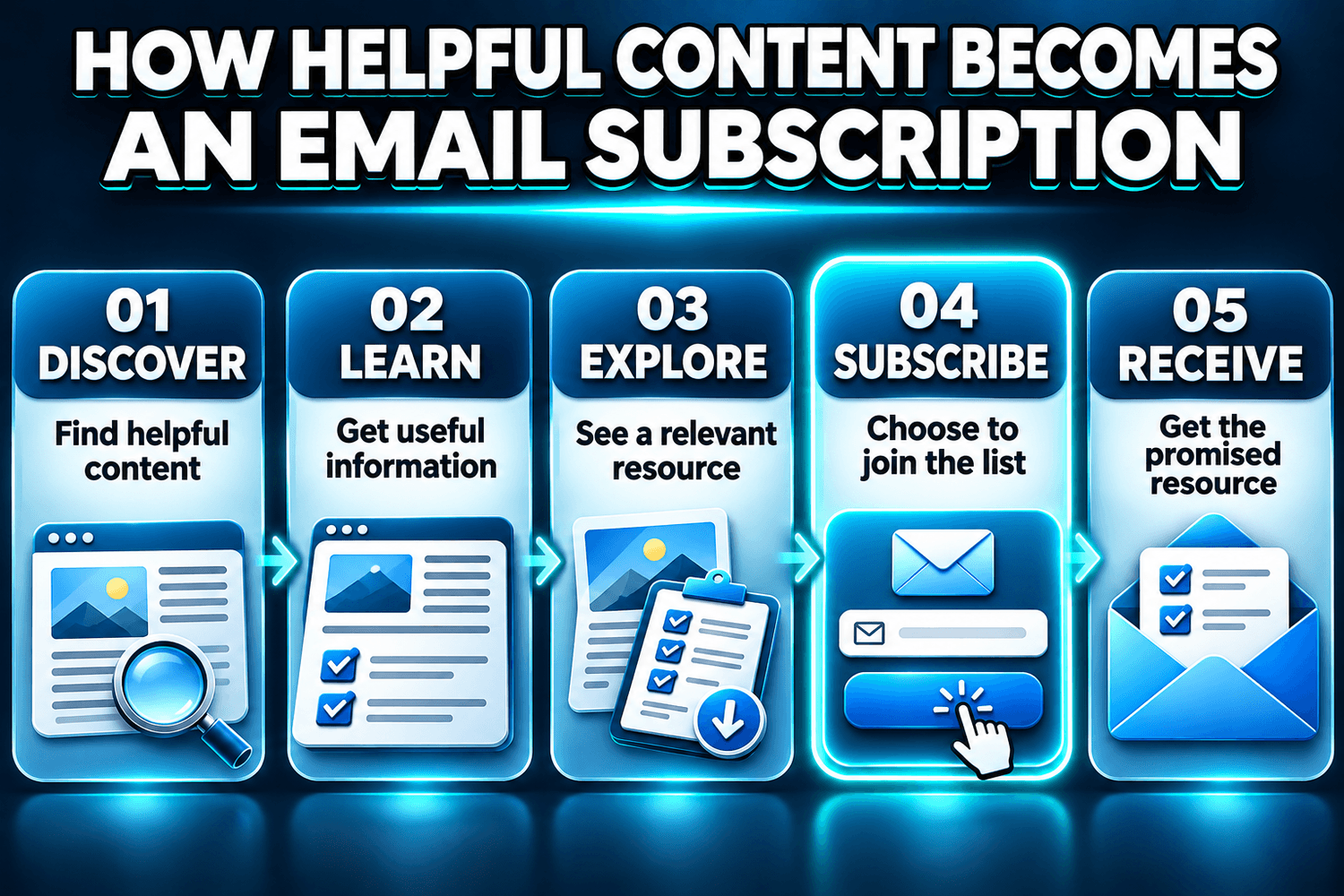
This creates a straightforward journey:
Discover useful content → Learn something valuable → See a relevant resource → Choose whether to subscribe → Receive the promised resource.
Test the entire process yourself before promoting it.
Submit the form, confirm that the subscription is recorded correctly, and check whether the promised resource arrives.
A clear signup experience matters more than decorative design or aggressive wording.