
How to Make Money Online With No Skills: 7 Realistic Ways to Start
Want to make money online but feel like you have nothing valuable to offer?
Maybe you've never worked online, don't have a website, or wouldn't know where to begin looking for your first opportunity.
Here's something worth understanding: You don't need to be an expert to start exploring legitimate ways to earn money online.
Some opportunities involve completing straightforward tasks. Others allow you to offer basic services, create digital products, or gradually build an online business.
But there's an important difference between getting started without skills and earning money without effort.
In this guide, you'll discover seven realistic ways to make money online with no skills, what each method requires, and how to choose a starting point that fits your circumstances.
No guaranteed earnings. No overnight success stories. Just practical options worth exploring.
1. Can You Really Make Money Online With No Skills?
Yes, it's possible to begin exploring online earning opportunities without specialized training or professional experience.
However, every legitimate method requires something from you. That might be your time, attention, willingness to learn, or ability to complete tasks reliably.
The key is finding an opportunity where you can develop the necessary abilities as you go.
What Making Money Online Without Skills Actually Means
When people search for ways to earn online without skills, they're usually looking for opportunities that don't require degrees, certifications, or years of experience.
For example, you don't need to be a professional writer to learn basic content formatting. You don't need a marketing degree to begin understanding affiliate marketing.
And you don't need advanced technical knowledge to participate in certain research surveys.
What matters is recognizing the difference between an easy starting point and an easy income.
Even beginner-friendly opportunities involve requirements, competition, and uncertainty.
What You Need Before Getting Started
Your exact requirements depend on the method you choose.
However, many online opportunities involve a few basic essentials:
- A reliable internet connection and suitable device.
- An email address for communication and account registration.
- Time to complete tasks or develop a service.
- A way to receive payments when eligible.
- Willingness to follow instructions and learn.
Some platforms have minimum age requirements, geographic restrictions, identity checks, or specific payment arrangements.
Review these conditions before registering or investing significant time.
You also don't necessarily need a website, existing social media following, or paid advertising budget.
Why Your First Earnings May Take Time
One of the biggest misconceptions about online income is that signing up for a platform automatically creates earning opportunities.
It doesn't.
Survey availability can be inconsistent. Freelancers must find clients. Digital products need buyers. Affiliate marketers need people who find their content useful.
Even when an opportunity is legitimate, it may take time to qualify, complete work, or receive payment.
Rather than expecting immediate results, focus on understanding the process and identifying whether an opportunity makes sense for your situation.

2. 7 Realistic Ways to Make Money Online Without Experience
These seven methods offer different starting points.
Some are better suited to occasional extra income. Others involve developing skills and building something over time.
Take Paid Online Surveys
Paid online surveys are among the more accessible opportunities for beginners.
Research companies collect feedback from consumers to help organizations understand preferences, purchasing habits, and opinions.
Participants may receive compensation for completing eligible surveys.
How to get started:
- Research a reputable survey platform.
- Review its eligibility and payment requirements.
- Complete your profile accurately.
- Check for surveys that match your circumstances.
- Track the time spent against compensation actually received.
Survey opportunities aren't guaranteed. You may be screened out after answering preliminary questions, and available work can vary considerably.
Surveys are generally better viewed as a possible source of modest supplemental income than as a dependable replacement for employment.
Best suited for: Someone who wants to explore occasional online tasks without finding clients or building an audience.
Test Websites and Apps
Companies sometimes pay participants to evaluate how people interact with websites, applications, and digital products.
You might be asked to navigate a website, locate information, complete a sample task, or explain which parts of an interface are confusing.
The goal is to provide useful feedback about the experience.
For example, a participant might test an online store's checkout process and explain where the instructions become unclear.
How to get started:
Research a legitimate usability-testing service, review its equipment requirements, and complete any necessary screening or practice test.
UserTesting is one example of a platform that connects participants with usability studies. Its official contributor information describes practice-test requirements and the use of a microphone for certain testing activities.
Review UserTesting contributor requirements
Testing opportunities depend on customer demand and participant eligibility. Some studies require speaking aloud, recording your screen, or meeting particular demographic criteria.
This makes website testing a possible supplemental opportunity, not a predictable daily income source.
Best suited for: Beginners who are comfortable navigating websites, following instructions, and communicating clear feedback.
Offer Simple Virtual Assistant Services
Virtual assistants help individuals and businesses complete administrative or organizational tasks remotely.
You don't necessarily need advanced qualifications to begin learning basic services.
Possible tasks include:
- Organizing spreadsheets.
- Formatting documents.
- Scheduling appointments.
- Maintaining simple records.
- Sorting non-sensitive information.
- Performing basic administrative research.
Suppose a small business owner has a spreadsheet containing hundreds of poorly organized entries.
A beginner who understands basic spreadsheet formatting could offer to clean up the layout, remove obvious duplicates, and organize the information.
That is a specific service with a clear deliverable.
How to get started:
Choose one task you can perform reliably. Practice it using sample information, create a simple example of your work, and research legitimate opportunities to offer that service.
Be clear about your abilities. Avoid promising bookkeeping, legal assistance, or other specialized work you aren't qualified to provide.
Finding clients may take time, but virtual assistance can provide opportunities to develop transferable skills.
Best suited for: Organized beginners who enjoy helping others complete practical tasks.
Start Freelancing With Beginner-Friendly Tasks
Freelancing involves offering a service to clients rather than working exclusively for one employer.
Although some freelance fields require extensive expertise, others allow beginners to develop manageable services through practice.
Examples include basic document formatting, proofreading simple nontechnical text, preparing presentation layouts, organizing research notes, or converting information into structured spreadsheets.
The important question isn't whether you have an impressive list of skills.
It's whether you can solve a particular problem accurately.
How to get started:
Choose one service and practice until you can produce a dependable result.
Create a sample demonstrating your work. Then research potential clients or reputable freelance marketplaces.
For instance, you might offer to turn an unorganized set of notes into a clearly formatted document.
Your sample should demonstrate exactly what the client can expect.
Avoid advertising expertise you haven't developed. Be realistic about deadlines, revisions, and your ability to complete the work.
Freelancing also involves competition, client communication, and sometimes marketplace fees.
Best suited for: Beginners willing to develop a practical service and communicate directly with clients.
Sell Digital Products Using Simple Templates
Digital products are downloadable resources customers can purchase and use.
Examples include printable planners, checklists, budget worksheets, simple business trackers, and organizational templates.
You don't necessarily need advanced design skills to create a basic product.
However, you do need to understand the problem it solves.
Imagine someone who struggles to organize weekly household expenses.
A clear budgeting worksheet might be useful if it makes tracking expenses easier.
The value comes from solving that problem, not from adding decorative graphics.
How to get started:
Identify a specific audience need, create a useful original template, test it for clarity, and research a suitable selling platform.
Check marketplace fees, licensing rules, and restrictions before listing anything.
Creating the product is only part of the process.
You must also help potential buyers discover it, explain its value, and provide an accurate description.
A digital product can remain available for purchase after it's created, but that doesn't mean it will generate automatic or passive income.
Best suited for: Creative or organized beginners who enjoy making practical resources and are willing to learn basic product marketing.
Create Helpful Content and Explore Affiliate Marketing
Affiliate marketing involves recommending relevant products or services and potentially earning commissions when qualifying actions occur through your referral links.
It's different from getting paid to complete individual tasks.
Instead, you create useful content that helps people understand a problem, evaluate options, or make informed decisions.
For example, someone interested in home organization could publish helpful information about organizing small spaces.
Over time, they might introduce relevant products or services that genuinely support the reader's needs.
How to get started:
Choose a topic you want to learn about, identify common questions people ask, and begin creating useful content.
You might use a blog, social platform, newsletter, or another publishing channel.
Research affiliate programs that fit your topic and review their commission conditions, approval requirements, and promotional policies.
You don't necessarily need an existing audience to begin creating content. But earning commissions generally requires attracting relevant people and earning their trust.
Also, disclose compensated recommendations appropriately. The FTC's Endorsement Guides explain the importance of clear disclosures when affiliate relationships could affect how readers evaluate recommendations.
Affiliate marketing usually requires more learning and patience than completing individual paid tasks.
Best suited for: Beginners interested in content creation, marketing, and developing a longer-term online business.
Offer Online Research and Data Organization Services
Businesses and individuals sometimes need assistance collecting, checking, and organizing publicly available information.
This work may involve researching business websites, comparing publicly listed product features, organizing contact information obtained through legitimate means, or compiling information into spreadsheets.
The value comes from saving someone time while delivering accurate, well-organized information.
For example, a local business might need a comparison of publicly advertised features from several competing services.
You could organize the information into a readable table, include source links, and identify details that require confirmation.
How to get started:
Practice gathering information from reliable public sources.
Learn basic spreadsheet organization and develop a simple sample report.
Then look for legitimate clients who need research or organizational assistance.
Be careful with privacy, confidential information, copyright, and website terms. Never collect or distribute sensitive personal information without appropriate authorization.
Best suited for: Detail-oriented beginners who enjoy research, checking information, and organizing data.
3. How to Choose the Best Online Earning Method for You
With seven options available, you might be tempted to try everything.
A better starting point is to compare what each opportunity requires and choose one that fits your circumstances.
Compare Startup Costs, Time, and Learning Requirements
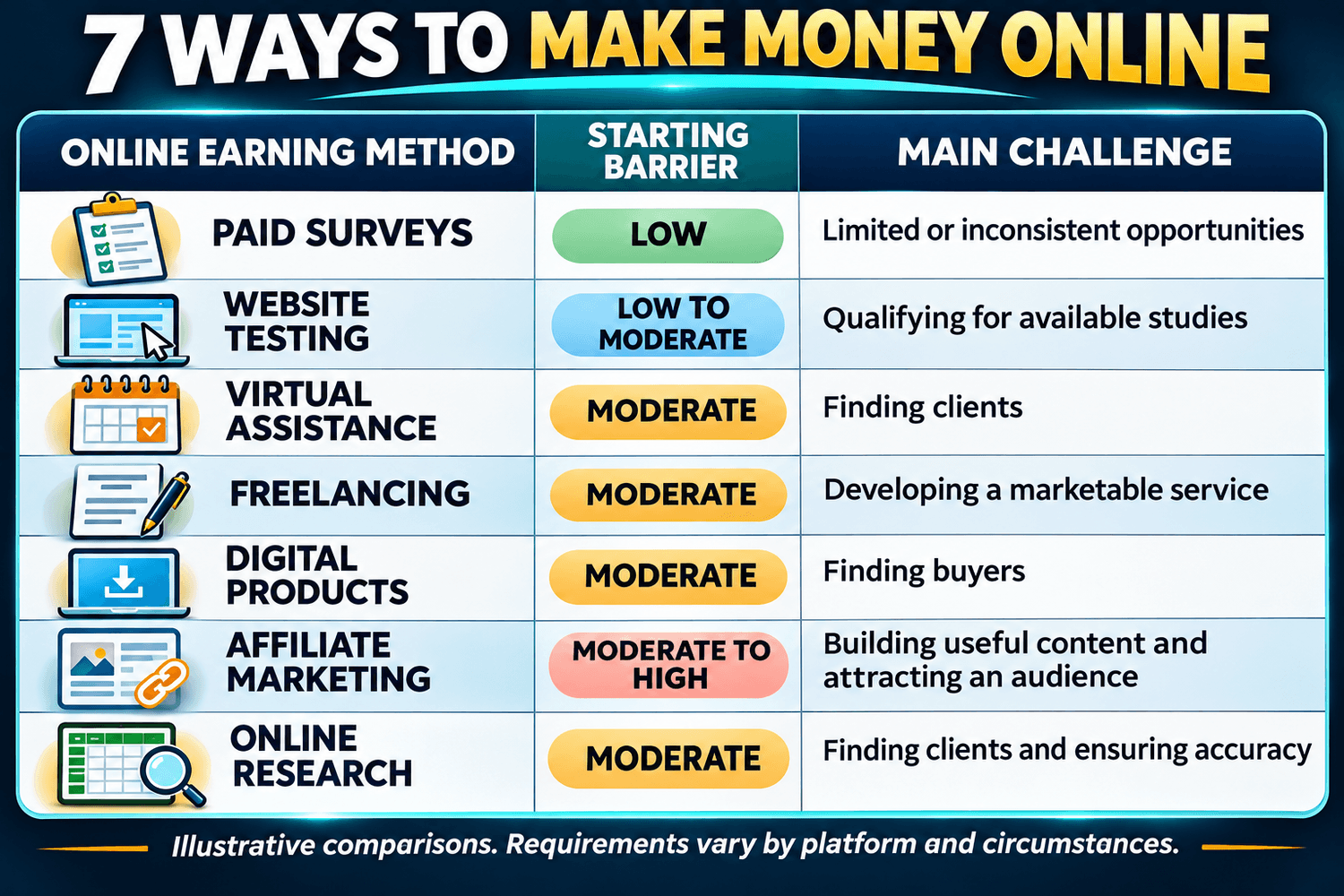
Here's a practical comparison of the seven methods.
| Method | Typical Starting Barrier | Main Challenge |
|---|---|---|
| Paid surveys | Low | Limited or inconsistent opportunities |
| Website testing | Low to moderate | Qualifying for available studies |
| Virtual assistance | Moderate | Finding clients |
| Freelancing | Moderate | Developing a marketable service |
| Digital products | Moderate | Finding buyers |
| Affiliate marketing | Moderate to high | Building useful content and attracting an audience |
| Online research | Moderate | Finding clients and ensuring accuracy |
These are qualitative editorial comparisons, not measured industry averages. Costs and requirements vary by platform and individual circumstances.
Choose Between Small Tasks and Long-Term Opportunities
Some methods are primarily task-based.
You complete an eligible survey or usability test and may receive compensation for that specific activity.
Other methods involve building a service or business.
Virtual assistance and freelancing depend on attracting clients. Digital products depend on finding buyers. Affiliate marketing depends on helping interested people discover useful content and relevant recommendations.
Neither approach is automatically better.
If you're looking for occasional supplemental income, task-based opportunities may be worth exploring.
If you want to develop something over time, learning a service or building useful content may offer a more suitable direction.
Match an Opportunity to Your Available Time
Consider how much time you can realistically dedicate each week.
Someone with an unpredictable schedule might prefer exploring surveys or usability tests when opportunities are available.
Someone who can reserve regular work periods might prefer developing a freelance service or publishing helpful content.
Also consider your interests.
If you dislike writing, content creation may not be your ideal starting point. If you enjoy organizing information, virtual assistance or research services might be more appealing.
Choose a method you can realistically practice, not simply the one advertising the biggest earnings.
4. How to Get Started With Your First Online Income Opportunity
Once you've identified a suitable method, the next challenge is turning your interest into action.
You don't need an elaborate business plan to begin exploring a small opportunity.
You need a clear starting point and a way to evaluate what happens.
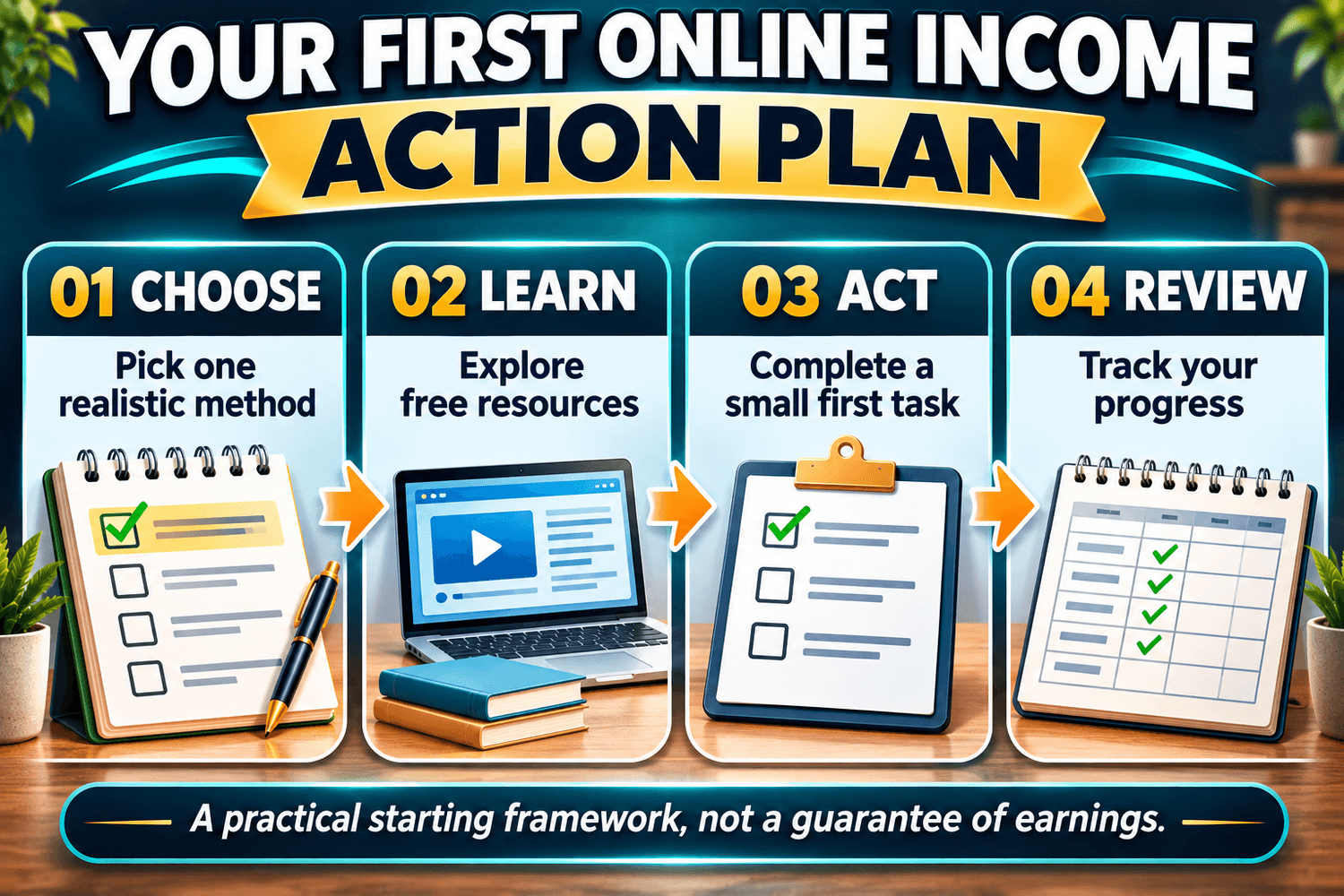
Pick One Method and Set a Small Goal
Start with one of the seven methods rather than attempting several simultaneously.
Your first goal should focus on something you can control.
For example:
- Complete the application process for a legitimate usability-testing platform.
- Create one sample spreadsheet for a virtual assistant service.
- Develop one useful digital template.
- Publish your first educational article about a topic you understand.
These goals don't guarantee earnings, but they help you make measurable progress.
Avoid setting a daily income target before understanding whether the opportunity is realistic for you.
Learn the Basics Using Free Resources
Before spending money on courses, software, or memberships, investigate what you can learn for free.
Official platform documentation, beginner tutorials, educational videos, and free practice exercises can help you understand the basics.
Suppose you're interested in virtual assistance but have never worked with spreadsheets.
Start by learning how to sort information, format cells, and create simple tables.
Practice with fictional information until you can produce a useful result.
You can gradually expand your abilities as you identify genuine client needs.
Take Your First Action and Track Your Progress
Don't measure progress solely by how much money you've earned.
Track meaningful activity, too.
A simple spreadsheet might include the date, activity completed, time spent, direct expenses, earnings actually received, and lessons learned.
If you're testing freelance services, track proposals sent and responses received.
If you're exploring affiliate marketing, track helpful content published and relevant engagement rather than assuming every visitor will become a customer.
For a more focused look at early earning milestones, read How to Make Your First $100 Online.
The important thing is to gather enough information to decide whether your chosen method deserves more attention or whether you should make a thoughtful adjustment.
5. Common Mistakes That Make Earning Online Harder
Getting started is only one part of the process.
Certain habits can make online earning opportunities more confusing or frustrating than they need to be.
Trying Too Many Methods at Once
It's easy to move from surveys to freelancing to affiliate marketing whenever you encounter a new opportunity.
But constantly switching directions can make it difficult to develop competence or understand what's working.
Consider choosing one suitable method and giving yourself a reasonable period to explore it.
That doesn't mean continuing indefinitely with something unproductive.
It means making decisions based on actual experience rather than every new promise you encounter.
Expecting Immediate or Guaranteed Earnings
Online opportunities frequently require preparation before compensation becomes possible.
You may need to qualify for tasks, develop a sample, find a client, or create content that attracts interested readers.
Even after completing these steps, earnings aren't guaranteed.
Be especially cautious when promotional material suggests that everyone can earn a particular amount simply by following a few instructions.
A realistic opportunity should make its requirements and limitations understandable.
Ignoring the Skills You Can Develop Along the Way
Starting without specialized skills doesn't mean remaining at the same skill level.
A beginner offering basic organizational services might gradually learn spreadsheet formulas, scheduling tools, and more advanced administrative tasks.
Someone creating educational content might improve their research, writing, and communication abilities.
These improvements can help you provide more value.
Instead of viewing skill development as an obstacle, consider it part of the opportunity.
6. How to Avoid Online Money-Making Scams
Unfortunately, people searching for beginner-friendly income opportunities can encounter misleading offers and outright fraud.
Learning to recognize warning signs is just as important as understanding legitimate methods.
Watch for Unrealistic Income Promises
Be skeptical of advertisements promising substantial earnings for almost no effort.
A claim that you can earn a large daily income simply by clicking buttons or copying instructions deserves careful investigation.
The Federal Trade Commission's side-hustle scam guidance warns about offers involving unusually high pay for minimal work, pressure tactics, and suspicious payment demands.
Legitimate opportunities should provide understandable information about the actual work and compensation arrangements.
Be Careful With Upfront Fees and Fake Job Offers
One particularly concerning scam involves supposed online tasks.
A person receives an unexpected message offering easy remote work. They complete simple activities on a website or app and see what appears to be accumulated earnings.
Eventually, they're told to deposit their own money to continue working or withdraw those earnings.
The FTC explains that these displayed earnings may be fictitious and that the deposits can result in real financial losses.
Read its guidance on recognizing task scams.
Don't confuse ordinary, disclosed business expenses with a supposed employer demanding money to release wages or unlock work.
Never deposit money simply to withdraw earnings a platform claims you have already made.
Verify Opportunities Before Sharing Personal Information
Before joining a platform or accepting a job offer, research the organization independently.
Look for official contact information, understandable payment terms, and credible information about the work.
Search for complaints, but remember that an absence of complaints doesn't prove legitimacy.
Be especially careful with unexpected messages, requests for sensitive documents, and pressure to make immediate decisions.
Some legitimate platforms require identity verification, but that should occur through an independently verified, appropriate process.
If you suspect fraud, you can report it through ReportFraud.ftc.gov.
Protecting your information and money should always take priority over chasing a promising opportunity.
Frequently Asked Questions
Can I Make Money Online With No Skills and No Money?
You can explore certain opportunities without paying startup fees or possessing specialized skills. However, you may still need a device, internet access, time, and a suitable payment method. Some methods also involve optional or unavoidable expenses.
What Is the Easiest Way to Start Making Money Online?
Paid surveys and some usability-testing opportunities may have relatively simple entry requirements. However, qualifying for tasks and receiving consistent opportunities can be difficult. The easiest method to explore isn't necessarily the most dependable source of income.
Do I Need a Website to Make Money Online?
No. Surveys, website testing, virtual assistance, and many freelance services don't require you to own a website. Some content and affiliate marketing approaches can also begin on third-party platforms, subject to their rules. A website may become useful as your activities develop.
How Long Does It Take to Make Your First Dollar Online?
There's no reliable universal timeline. It depends on the opportunity, eligibility, demand, your abilities, and the time required to complete and receive payment for work. Focus on understanding the process rather than expecting earnings by a particular date.
7. Products, Tools, and Resources for Getting Started
You don't need an expensive collection of software to begin exploring online income opportunities.
Start with resources that help you learn, stay organized, and evaluate legitimate options.
Free Learning and Skill-Building Resources
Look for free educational materials related to your chosen method.
For administrative work, learn basic spreadsheet and document organization. For content creation, practice researching questions and explaining information clearly.
Official help centers and free tutorials are useful starting points.
Tools for Organizing Your Online Work
A basic spreadsheet, calendar, note-taking application, and email account may be sufficient for many beginner activities.
Use these tools to organize tasks, track time, record legitimate expenses, and monitor actual earnings.
Choose tools based on what you need rather than purchasing software before you understand your workflow.
Helpful Guides for Your Next Steps
For earning milestones, explore the Marketing With Tom guide on making your first $100 online.
If you're considering online work offers, the FTC's Job Scams consumer guide provides additional information about recognizing fraudulent opportunities.
Choose one realistic starting point, learn its requirements, and take a manageable first action. Your goal isn't to master everything immediately. It's to begin with enough understanding to make informed decisions about what comes next.
Want a Simple Way to Start Building Online Income?
You don't need advanced technical skills, an expensive website, or a big advertising budget to begin exploring online opportunities.
Discover the beginner-friendly lead generation method I use to build my online business.
I've put together a free report that walks you through my approach, including practical, copy-and-paste-friendly steps you can explore for yourself.

WRITTEN BY
Tom Kimpton
Founder, Marketing With Tom
Tom Kimpton is the founder of Marketing With Tom, where he shares practical strategies for affiliate marketing, traffic generation, email list building, and making money online. He focuses on testing tools and strategies firsthand and sharing what he learns to help beginners build their online business.
READY FOR THE NEXT STEP?
Build Your Traffic and Email List With the Tools I Use
I’ve put together the resources I use and recommend for generating
traffic, building an email list, and growing an online business.
If you’re looking for a simple place to start, this is it.

Practical strategies for building traffic, growing an email list, and creating an online marketing business.
Start Here
New to online marketing?
Start with practical guides for generating traffic, building your email list, and creating a simple marketing system.
© 2026 Marketing With Tom. All rights reserved.