You don't need thousands of Instagram followers, a popular TikTok account, or a Facebook group to start affiliate marketing.
But you do need something equally important: a way for interested people to discover your recommendations.
That's the challenge many beginners overlook.
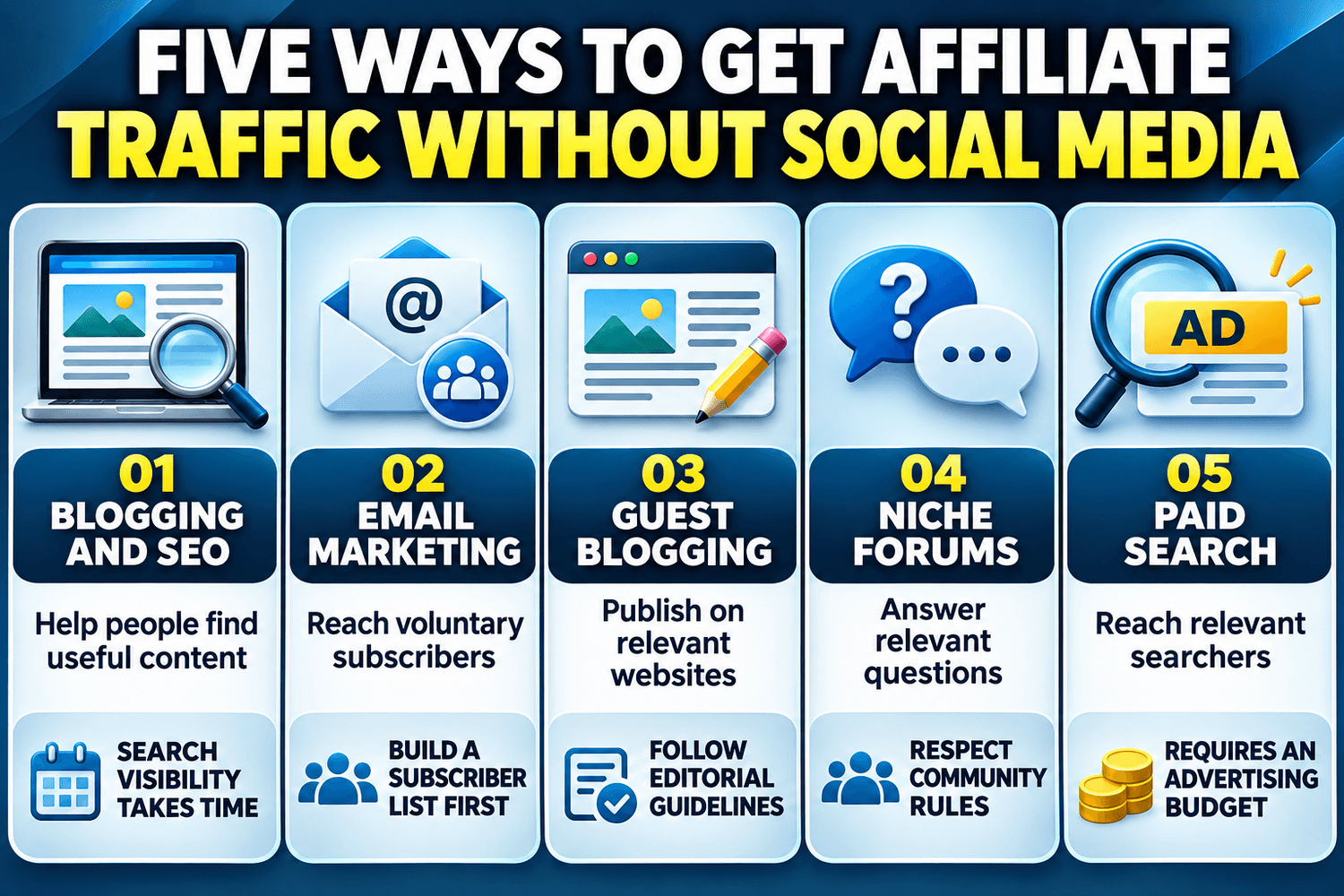
Affiliate marketing without social media is possible because people discover products through search engines, helpful websites, email newsletters, and other channels every day.
The key is choosing a realistic method for attracting visitors, matching it with relevant affiliate offers, and building trust before asking anyone to buy.
Here's how to put those pieces together, even if you're starting without followers, a website, or an existing email list.
Can You Really Start Affiliate Marketing Without Social Media?
Yes. Social media is one way to promote affiliate products, but it isn't the only option.
Affiliate marketing works when someone discovers your recommendation, follows your affiliate link, and completes an action that qualifies for a commission under the program's terms.
Your job is to connect the right people with useful solutions.
How Affiliate Marketing Works Without Followers
Imagine someone searching Google for a beginner-friendly email marketing tool.
They discover an article comparing several options, read the recommendations, and click a link to learn more.
If they purchase through a qualifying affiliate link, the publisher may earn a commission.
No Instagram account was necessary.
The visitor arrived because the content answered a question they were already asking.
This illustrates an important principle: relevant visitors matter more than follower counts.
A small number of people actively researching a product may be more useful to an affiliate marketer than a large audience with little interest in that product.
That doesn't guarantee commissions, but it provides a practical direction.
Why Social Media Is Only One Way to Generate Traffic
Social media generally relies on people discovering content through feeds, recommendations, shares, and interactions.
Other channels work differently.
Search engines help people find information when they're actively looking for answers. Email newsletters allow publishers to communicate with people who have voluntarily subscribed.
Guest articles can introduce your expertise to readers of established websites.
Each approach has advantages and limitations.
The goal isn't to prove that one channel is universally better. It's to choose a method that fits your available time, resources, and preferred way of working.
What You Still Need to Get Started
Although social media isn't required, a workable affiliate marketing strategy needs several basic components:
- A defined audience with recognizable problems.
- A relevant product or service to recommend.
- An affiliate program that permits your promotional approach.
- A place to publish or distribute helpful information.
- A method for attracting interested visitors.
- Clear affiliate disclosures and trustworthy recommendations.
You don't need to establish everything simultaneously.
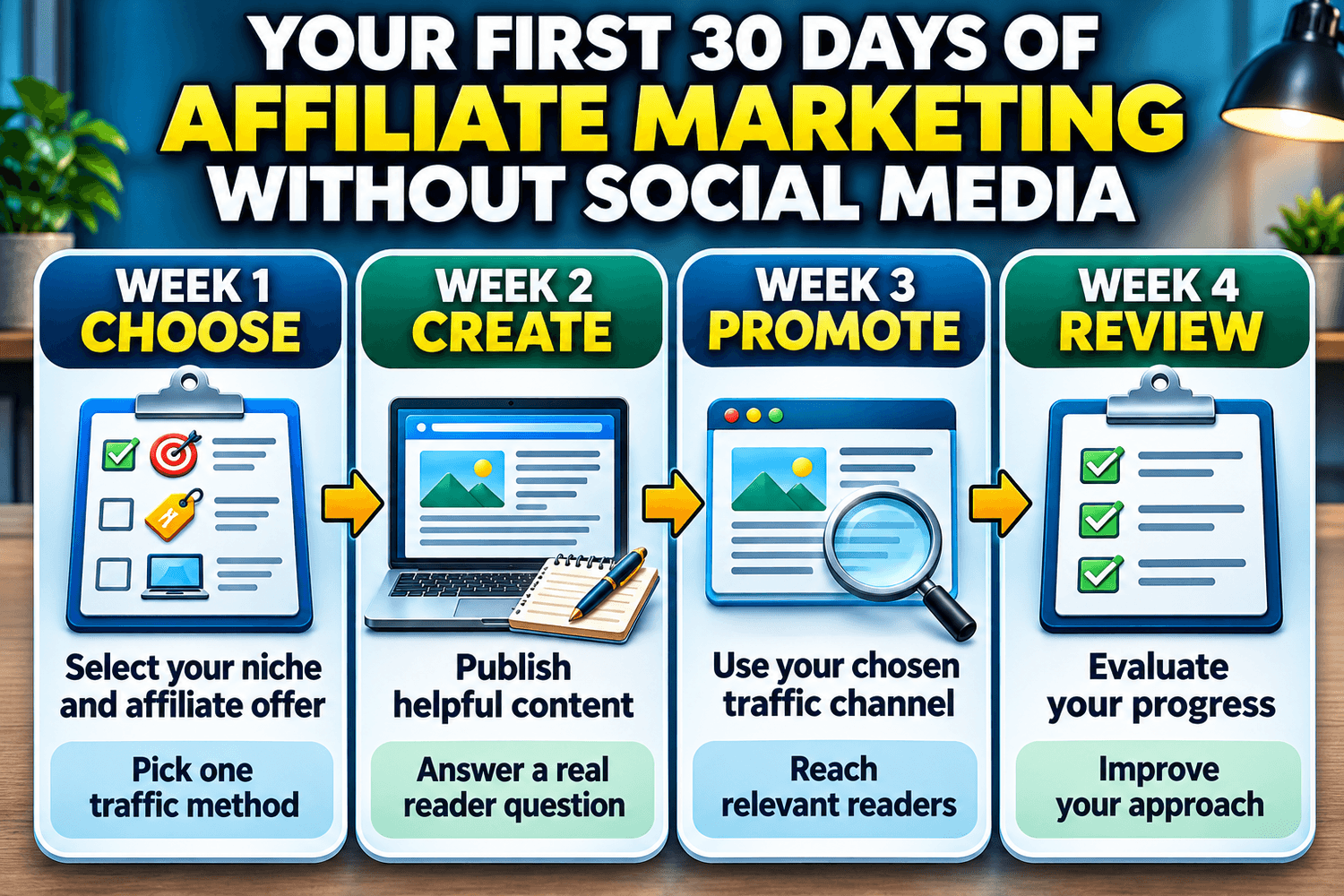
Start with a niche, choose a suitable offer, and decide how potential customers will discover it.