Affiliate Marketing for Beginners With No Experience: Where to Start and What to Do First

Starting affiliate marketing can feel confusing when you have no experience, no established audience, and little money to invest.

You might hear that you need a website, expensive software, thousands of followers, or the perfect product before you can begin. Then another tutorial tells you something completely different.

The problem isn't necessarily a lack of opportunity. It's knowing which decisions deserve your attention first.

Affiliate marketing for beginners with no experience starts with understanding how the business works, choosing a focused audience, finding relevant products, and learning one reliable way to reach potential customers.

You don't need to master everything immediately. You need a practical starting point and a process you can improve as you learn.

This guide explains what matters, what can wait, and how to organize your first 30 days without relying on unrealistic income promises.

What Is Affiliate Marketing and How Does It Work?

Affiliate marketing is a business model in which someone promotes another company's products or services and may earn compensation when a referral meets the company's commission requirements.

What an Affiliate Marketer Actually Does

An affiliate marketer connects people who have a problem or need with products that might help them.

For example, someone researching email marketing software may want to understand which features matter before choosing a platform.

An affiliate marketer could publish an educational article explaining those features and introduce a relevant product.

The company handles the product, checkout, and usually the customer service. The affiliate concentrates on attracting an appropriate audience and making useful recommendations.

That doesn't mean the affiliate has no responsibilities. Accurate information, transparent disclosures, and compliance with program rules remain important.

How Affiliate Links, Referrals, and Commissions Work

Affiliate programs generally provide special referral links or other approved tracking methods.

A typical process looks like this:

  1. You join an affiliate program and receive approval.
  2. You obtain an authorized affiliate link.
  3. You publish helpful content containing a relevant recommendation.
  4. A visitor clicks your link.
  5. The visitor completes an action that qualifies under the program's terms.
  6. The program records an eligible commission, subject to its conditions.

Not every click produces a commission.

Programs may use tracking windows, attribution rules, exclusions, and other conditions to determine whether a referral qualifies.

Amazon Associates, for example, explains that commissions depend on qualifying purchases and compliance with its operating agreement.

What Beginners Need to Know About Earning Commissions

Commission arrangements differ.

Some programs compensate affiliates for qualifying purchases. Others may pay for eligible leads, subscriptions, or other defined actions.

Consider a hypothetical product costing $50 with a 10% commission.

A qualifying purchase could produce a $5 commission before any applicable adjustments.

That is an illustration, not a prediction of what a beginner will earn.

The important lesson is that affiliate earnings depend on qualifying customer actions, not simply publishing links or attracting visitors.

Understanding that distinction helps you make better decisions about products and traffic.

What Do You Need to Start Affiliate Marketing With No Experience?

You can begin learning affiliate marketing without purchasing an expensive collection of tools.

However, there is a difference between learning the fundamentals and meeting the requirements of a particular affiliate program.

Can You Start Without Experience, Money, or a Website?

Previous affiliate marketing experience is not necessarily required.

Some programs accept beginners, while others evaluate your website, content, audience, or promotional methods before approving an application.

A website isn't universally required. Certain programs permit eligible social media channels or other approved publishing properties.

Starting without paying for advertising is also possible, although free platforms can have limitations, and building an audience still requires time and effort.

Your first goal should be understanding how you intend to reach people, rather than purchasing tools before you have a strategy.

The Basic Tools and Resources Beginners Actually Need

Think about your requirements in two categories.

Essential starting needs:

  • A clearly defined audience or topic.
  • A way to research audience questions.
  • An appropriate publishing channel.
  • Access to an affiliate program when eligible.
  • A method for creating useful content.
  • An understanding of relevant disclosure and program rules.

Optional investments:

  • Premium website themes.
  • Paid keyword research software.
  • Advanced automation platforms.
  • Expensive marketing courses.
  • Paid advertising campaigns.

Optional tools may become useful later. They aren't automatic prerequisites for learning the business.

A beginner using a free publishing platform and a focused content plan may be better positioned to learn than someone paying for several tools without knowing how to use them.

What You Should Learn Before Joining Affiliate Programs

Before applying, become comfortable answering a few basic questions.

Who are you trying to help? What problems do they have? Which products might solve those problems? Where will they find your recommendations?

Also learn how affiliate disclosures work and why promotional restrictions matter.

These fundamentals help you evaluate whether a program fits your plans.

You don't need perfect answers. You need enough clarity to avoid joining random programs simply because they advertise attractive commissions.

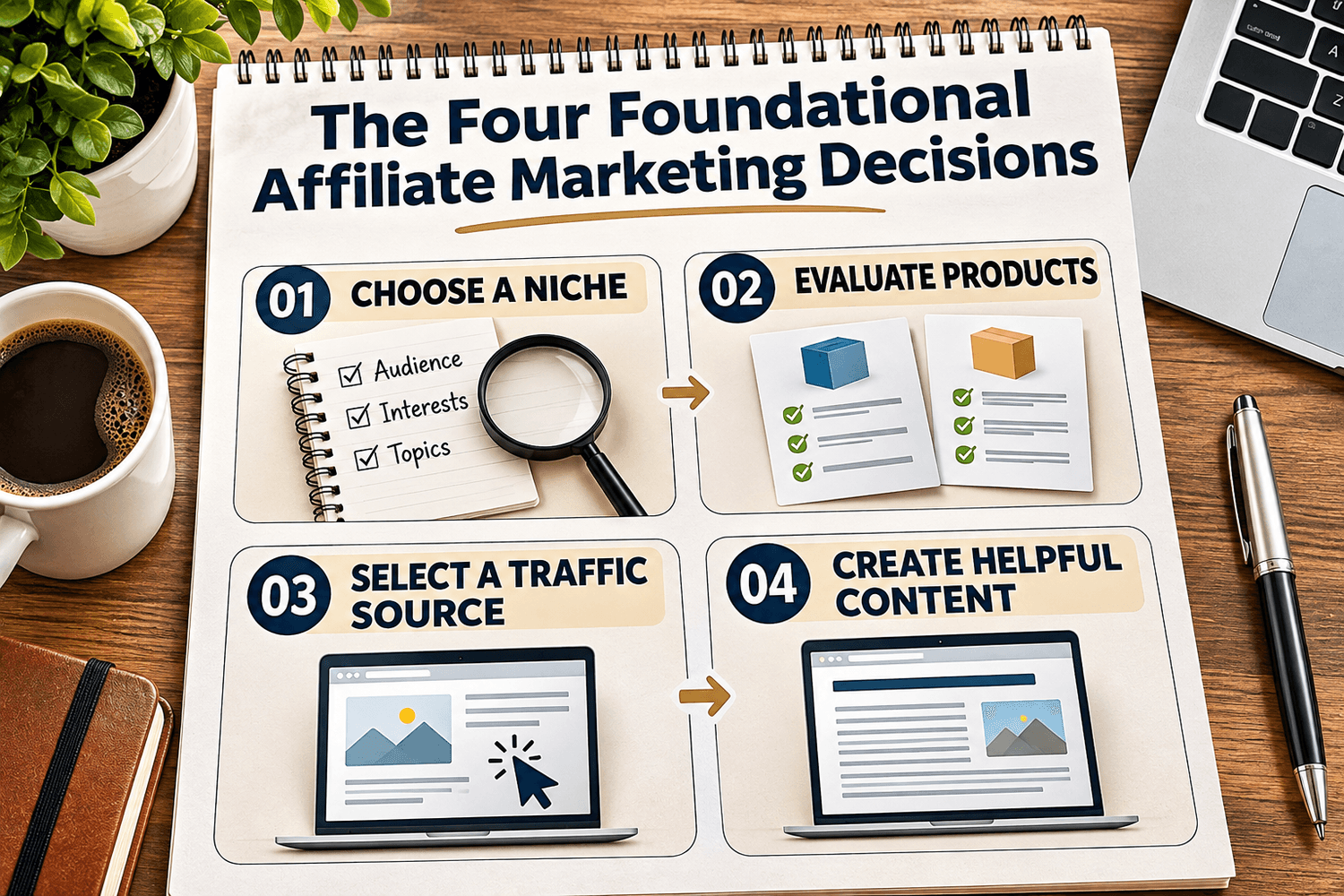
Choose a Beginner-Friendly Niche Before Choosing Products

A niche is the particular subject area or audience you decide to serve.

Choosing one gives your content a recognizable purpose.

Start With Problems and Interests You Understand

Begin with subjects you can reasonably research, explain, and continue learning about.

You don't have to be an established expert, but you should be willing to develop genuine knowledge.

Consider subjects such as home gardening, beginner fitness, personal organization, or email marketing.

Then identify the problems people encounter within those subjects.

For example, someone interested in home gardening might focus on helping apartment residents grow vegetables in limited spaces.

That audience has identifiable questions and potentially relevant product needs.

Check Whether People Need Products in Your Niche

A useful niche should contain real problems, not merely products you want to promote.

Explore the questions people ask in search results, community discussions, product documentation, and relevant forums.

Look for recurring needs.

Are people comparing alternatives? Trying to solve practical problems? Looking for tools that make a task easier?

Then investigate whether suitable products exist and whether legitimate affiliate opportunities are available.

Product availability alone doesn't prove that a niche will be profitable. It simply helps establish whether affiliate recommendations could fit naturally.

Narrow Your Focus Without Making Your Niche Too Small

A broad subject such as fitness includes many different audiences.

A narrower direction such as beginner home workouts gives you a clearer starting point.

You could publish content about basic equipment, workout planning, and choosing suitable beginner resources.

But narrowing your niche excessively can limit the questions you can answer.

Choose a focus broad enough to support ongoing useful content while specific enough that readers understand whom you're helping.

You can refine that focus as you gain experience.

Find Affiliate Programs and Products Worth Promoting

Once you've selected a niche, investigate products that genuinely match your audience's needs.

Avoid choosing offers based only on advertised commission rates.

Where Beginners Can Find Affiliate Programs

Affiliate opportunities commonly appear through two arrangements.

Direct affiliate programs are managed by individual merchants or service providers.

Affiliate networks connect participating merchants and affiliates through a shared platform.

You can begin by checking whether companies relevant to your niche offer official affiliate programs.

Review their application requirements before applying.

Some programs expect an established website or social presence. Others may have different eligibility standards.

Never assume approval is automatic.

How to Evaluate Products, Commissions, and Program Terms

Before promoting an offer, examine its suitability.

Use this beginner evaluation checklist:

  • Audience fit: Does the product solve a problem your readers actually have?
  • Product credibility: Can you find reliable information about its features and limitations?
  • Merchant reputation: Is the business identifiable and its offer understandable?
  • Commission conditions: What customer action qualifies for payment?
  • Payment requirements: Are there thresholds, restrictions, or other conditions?
  • Promotional rules: Can you promote the product through your chosen platform?
  • Customer value: Would the recommendation still make sense without a commission?

This last question is particularly useful.

If you wouldn't reasonably recommend a product without the financial incentive, reconsider whether it belongs in your content.

Why Product Relevance and Trust Matter More Than High Commissions

A high commission doesn't automatically make an offer suitable.

Imagine promoting an expensive business tool to readers who only need a basic free solution.

Even if the commission looks attractive, the recommendation may fail to address their needs.

A less expensive or simpler product might be more appropriate.

Trust develops when your explanations help readers make informed decisions.

That includes discussing limitations, acknowledging alternatives, and avoiding claims you cannot support.

Choose products that fit the reader before considering how much you might earn.

Choose One Traffic Source and Learn How to Use It

Traffic refers to people visiting your content or promotional destination.

Without relevant visitors, even a useful affiliate recommendation may never be seen.

Understand the Difference Between Traffic and an Audience

Traffic measures visits or visitors, depending on the reporting system.

An audience consists of people who recognize, follow, or return to your content.

Someone might discover one article through a search engine and never return.

Another reader might subscribe to your updates and regularly explore your recommendations.

Both interactions can have value, but they represent different relationships.

For beginners, the priority is reaching people whose interests match the content rather than chasing large, unrelated traffic numbers.

Compare Blogging, Social Media, and Other Free Traffic Methods

Different traffic sources require different skills.

Blogging allows you to publish detailed tutorials, comparisons, and educational articles. Search visibility may develop gradually, and maintaining a website can involve costs.

Social media allows you to share useful information and participate in relevant conversations. Results depend on platform rules, audience interest, and consistent participation.

Community participation can help you understand real questions and contribute useful answers. However, many communities restrict affiliate links and self-promotion.

Video content can demonstrate products or explain processes visually, although production may require additional effort.

No single method is automatically best for every beginner.

Choose based on your communication strengths, available time, audience behavior, and the platform's rules.

Choose One Traffic Source You Can Use Consistently

Trying blogging, multiple social networks, video publishing, and paid advertising simultaneously can scatter your attention.

Instead, select one primary channel.

If you enjoy writing detailed explanations, blogging might suit you.

If you prefer short educational posts and conversations, a relevant social platform may be more manageable.

Set a publishing schedule you can realistically maintain.

You can explore additional channels later, once you understand what your initial approach requires.

Consistency gives you opportunities to practice, evaluate feedback, and improve.

Create Helpful Content Before Trying to Make Sales

Affiliate content should help readers understand a problem or make a decision.

The product recommendation supports that purpose rather than replacing it.

Identify Questions Your Target Audience Is Already Asking

Start with questions relevant to your niche.

Someone learning email marketing might ask how to choose an email platform, create a signup form, or organize a welcome sequence.

Each question could become a useful educational article.

Look for questions that require explanation rather than simply inserting an affiliate link into a short promotional message.

Your content should answer the reader's question even if they decide not to purchase anything.

Choose Beginner-Friendly Content Formats

Several formats work well for educational affiliate content.

Tutorials explain how to complete a task.

Comparison articles help readers understand differences between suitable options.

Beginner guides introduce unfamiliar concepts in a logical sequence.

Problem-solving articles address a specific frustration or obstacle.

Choose the format that best matches the reader's question.

For more guidance on connecting useful content with relevant recommendations, read How to Create Affiliate Content That Converts.

Introduce Affiliate Recommendations Naturally

Imagine writing an article explaining how to choose an email marketing platform.

You might discuss ease of use, subscriber management, automation features, pricing considerations, and support.

A relevant affiliate recommendation could appear when explaining an option that meets a particular reader's needs.

The recommendation should include meaningful context.

Explain who the product may suit, what limitations readers should investigate, and why the option is relevant.

Avoid implying that you've personally tested a product unless you actually have.

Disclose Affiliate Relationships Clearly

Affiliate relationships should be transparent.

The Federal Trade Commission advises that material connections between endorsers and marketers should be disclosed clearly and conspicuously.

For affiliate recommendations, disclosures should be easy to notice and sufficiently close to the relevant endorsement or link.

A plain-language statement explaining that you may earn a commission from qualifying purchases can help readers understand the relationship.

Specific programs may impose additional requirements.

Amazon Associates, for example, requires a particular associate identification statement as part of its program rules.

Review the FTC's endorsement guidance and the applicable program terms before publishing promotional content.

Honest recommendations and clear disclosures protect the reader's ability to make an informed decision.

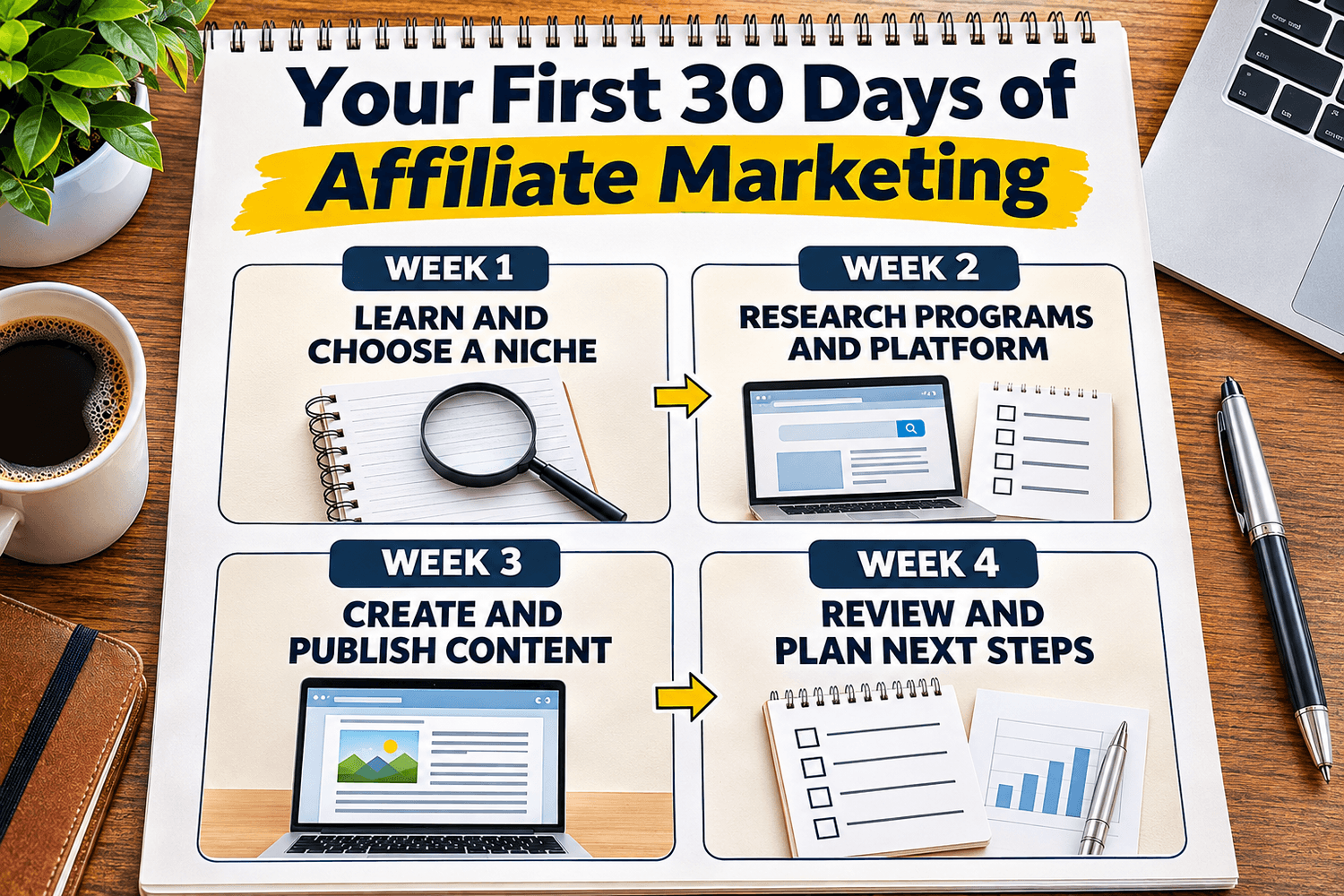
Your First 30 Days: A Simple Affiliate Marketing Starting Plan

You don't need to build an entire affiliate business in one month.

Use the following schedule as an illustrative learning and implementation framework, not a promise of traffic or income.

Week 1: Understand the Basics and Choose Your Niche

Learn how affiliate links, qualifying referrals, and commissions work.

Identify a subject you can research consistently.

List several audience problems and explore the questions people ask about them.

By the end of the week, aim to have a focused niche and a clear description of the people you want to help.

Week 2: Research Affiliate Programs and Select Your Platform

Identify relevant merchants and investigate their affiliate requirements.

Compare product suitability, program terms, and promotional restrictions.

Choose one primary publishing platform.

If a program requires an established content channel, concentrate on creating that channel before applying.

Your goal is to establish a sensible direction, not collect as many affiliate accounts as possible.

Week 3: Create and Publish Your First Helpful Content

Choose one specific audience question.

Research it carefully and create content that provides a useful answer.

Include clear explanations, practical examples, and accurate information.

If you have an approved affiliate relationship and an appropriate recommendation, follow the program's linking and disclosure rules.

Otherwise, publish the educational content without forcing a promotional link.

Completing a useful first piece is more valuable than waiting indefinitely for a perfect marketing system.

Week 4: Review Your Progress and Plan Your Next Steps

Review what you've completed.

Did you choose a niche? Establish a publishing channel? Produce useful content? Understand the requirements of suitable programs?

If performance data is available, examine it without drawing conclusions from very small numbers.

Identify one or two improvements for the following month.

Your first 30 days should establish a foundation for continued learning.

Program approval, search visibility, and commissions may take longer, and none is guaranteed by following this schedule.

Avoid Common Beginner Mistakes and Build From Your First Results

The early stages of affiliate marketing involve experimentation.

Progress becomes easier to evaluate when you distinguish between normal learning challenges and problems that genuinely require a change.

Avoid Switching Niches, Products, and Traffic Sources Too Often

Changing direction after every disappointing result makes it difficult to understand what is working.

A beginner might publish two articles, receive little traffic, and immediately abandon blogging for another platform.

But limited early data doesn't necessarily establish that a strategy has failed.

Before switching, review whether the content answers relevant questions, reaches the intended audience, and offers useful information.

Make changes for identifiable reasons rather than reacting to every short-term fluctuation.

Measure Progress Beyond Affiliate Commissions

Commissions are only one possible measurement.

Other useful indicators include:

  • Helpful content completed and published.
  • Relevant website visits or content views.
  • Engagement with educational material.
  • Affiliate link clicks.
  • Qualifying referrals or sales.

These measurements describe different activities.

A visit doesn't automatically become a click, and a click doesn't automatically produce a sale.

Understanding those distinctions helps you evaluate where improvements may be needed.

Know When to Improve Your Strategy Instead of Starting Over

Review the evidence available.

If people discover your content but leave without finding an answer, examine its relevance and clarity.

If readers engage with your content but rarely explore a recommendation, consider whether the product actually fits their needs.

If an affiliate offer receives interest but doesn't produce qualifying conversions, investigate the offer, program conditions, and audience alignment before assuming the cause.

Small samples can be misleading, so avoid making sweeping decisions based on a handful of interactions.

Improvement should be deliberate.

Build Toward Your First Affiliate Sale Without Rushing the Process

Your first affiliate sale can be an encouraging milestone, but it shouldn't determine whether your early learning efforts have value.

Focus on building a repeatable process:

Understand a reader's problem, create useful content, recommend suitable solutions when appropriate, and evaluate the results.

You can explore that process further in How to Get Your First Affiliate Sale.

Affiliate marketing is not a guaranteed income opportunity. Developing useful skills and trustworthy content gives you a more practical foundation than chasing quick commissions.

Frequently Asked Questions

Is Affiliate Marketing Difficult for Complete Beginners?

Affiliate marketing is relatively straightforward to understand, but developing the skills needed to attract an audience and make useful recommendations takes practice.

Beginners benefit from learning one concept at a time and working through manageable tasks rather than trying to master every marketing technique immediately.

How Much Time Should a Beginner Spend on Affiliate Marketing Each Week?

There is no universal weekly requirement.

Choose a schedule that allows enough time for research, content creation, and reviewing progress.

A smaller schedule you can maintain is often more useful than an ambitious plan you repeatedly abandon.

Can You Do Affiliate Marketing Without Showing Your Face?

Yes, some affiliate marketing approaches do not require appearing on camera.

Educational articles, written tutorials, and certain other content formats can work without showing your face.

However, you must still follow the rules of your chosen platform and affiliate program.

Do You Have to Buy a Product Before Promoting It as an Affiliate?

Not every affiliate program requires you to purchase a product before promoting it.

However, you must represent your knowledge and experience accurately.

You can explain documented product features without claiming firsthand experience. Never pretend to have tested or used something you haven't.

How Long Does It Take to Make Your First Affiliate Commission?

There is no reliable universal timeline.

Results depend on factors such as audience relevance, content quality, traffic, product suitability, and program requirements.

Some beginners may receive qualifying referrals sooner than others, while some may not earn commissions at all.

Focus on developing a useful process rather than relying on a promised deadline.

Products / Tools / Resources

Beginners can explore several resource categories as they develop their affiliate marketing strategy.

Affiliate program documentation: Review official merchant and network websites for eligibility, commission terms, payment conditions, and promotional rules.

Publishing platforms: Compare website builders, blogging platforms, and suitable social media channels according to your skills, budget, and intended audience.

Measurement tools: Use the analytics available through your publishing platform or affiliate dashboard to distinguish visits, clicks, and qualifying referrals.

Search and content guidance: Google Search Central provides guidance on creating helpful, reliable content for readers.

Affiliate disclosure guidance: The Federal Trade Commission explains how marketers should disclose relevant financial relationships and avoid misleading endorsements.

Start with resources that support your immediate needs. Add tools when you understand the problem they solve, not simply because other affiliate marketers use them.


Ready to Learn More About Building an Online Business?

Discover a beginner-friendly report exploring lead generation and practical online marketing activities you can learn and apply at your own pace.

Explore the Free Report

WRITTEN BY

Tom Kimpton

Founder, Marketing With Tom

Tom Kimpton is the founder of Marketing With Tom, where he shares practical strategies for affiliate marketing, traffic generation, email list building, and making money online. He focuses on testing tools and strategies firsthand and sharing what he learns to help beginners build their online business.

READY FOR THE NEXT STEP?

Build Your Traffic and Email List With the Tools I Use

I’ve put together the resources I use and recommend for generating

traffic, building an email list, and growing an online business.

If you’re looking for a simple place to start, this is it.

Practical strategies for building traffic, growing an email list, and creating an online marketing business.

Start Here

New to online marketing?

Start with practical guides for generating traffic, building your email list, and creating a simple marketing system.

© 2026 Marketing With Tom. All rights reserved.